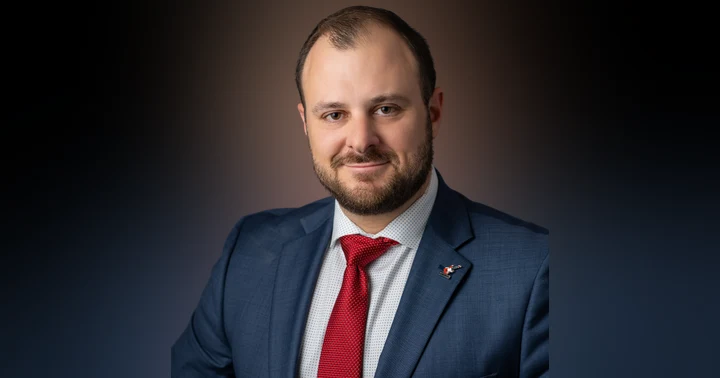
What Makes a Broker Great? Jonathan Lickstein on Building Real Brokerage Culture
EP. 301 – Jonathan Lickstein: What Makes a Great Broker in 2025
Jonathan Lickstein, COO of LoKation Real Estate, joins the Real Estate Excellence Podcast to break down what truly separates top brokers from the rest. Leading over 5,000 agents across six states, Jonathan shares how real leadership, agent support, and smart brokerage structure are transforming the industry.
From his early career selling real estate in Honduras to building one of Florida’s fastest-growing brokerages, Jonathan reveals the mindsets and systems that help agents thrive.
In this episode:
The traits of truly great brokers
What agents should demand from their brokerage
Why support and access matter more than splits
How AI and automation are changing brokerage leadership
The secret to agent retention and real culture
🎧 Listen in and learn what it takes to lead—and to be led—at the highest level.
📍 Featuring insights for agents across Jacksonville, St. Augustine, Ponte Vedra, and all of Northeast Florida.
Watch on YouTube → https://youtu.be/KtXJiIGekVA
Full transcript → https://www.tracyhayespodcast.com/301
#JonathanLickstein #RealEstateExcellencePodcast #BrokerLeadership #TopBroker #LoKationRealEstate #FloridaRealEstate #JacksonvilleRealEstate #StAugustineRealtor #PonteVedraHomes #NEFloridaRealEstate

 Apple Podcasts
 Spotify
 Overcast
 Castro
 PocketCasts
 RSS Feed
 What if the key to scaling your real estate career wasn’t selling more—but letting go?
In this episode of the Real Estate Excellence Podcast, Tracy Hayes sits down with Jonathan Lickstein, the award-winning COO of one of the nation’s fastest-growing independent brokerages. From launching his career unexpectedly in Honduras to leading a 5,000-agent operation across six states, Jonathan reveals how he uses cutting-edge AI, strong culture, and deep mentorship to scale operations, without losing the human touch.
Jonathan dives deep into how brokers can truly support agents in today’s competitive market, why building relationships is more important than ever, and the powerful moment that made Jonathan realize he needed to let go in order to grow. Whether you're a solo agent, team leader, or managing broker, this episode offers a blueprint for sustainable growth, tech integration, and authentic leadership.
Ready to level up your real estate career? Share this episode with a fellow agent, leave a review, and follow the Real Estate Excellence Podcast for more insider strategies from the industry’s best.
Highlights:
00:00 – 07:04 From Georgia Tech to Honduras
- Career detour from engineering to real estate
- Building the largest property network on Roatan
- Selling million dollar homes at 19
- The power of bilingual networking
- Returning to the US market with experience
07:05 – 14:01 Rebuilding in Florida with Relationships
- Restarting a business with zero clients
- Youth sports as a referral engine
- Using branded email for subtle marketing
- Getting 6 million in sales from one connection
- Leveraging everyday conversations
14:02 – 24:25 Winning with AI and Building Broker Efficiency
- How the brokerage won Inman’s AI award
- Using AI to automate compliance and contracts
- Creating a GPT powered broker avatar
- Saving agents hours of manual entry
- Voice activated contract creation system
24:26 – 33:59 The Power of Letting Go to Scale
- The game changing moment on a baseball field
- Why delegation is critical for brokers
- Replacing yourself without losing culture
- Empowering your team to lead
- Avoiding burnout as a growing company
34:00 – 45:13 What Makes a Great Brokerage and How to Choose
- Red flags in bad broker leadership
- Why 100 percent commission isn’t everything
- The importance of real support not just tools
- How brokers should evaluate their own value
- Questions every agent should ask before switching
45:14 – 59:50 Retention and Growth with Real Tech and Mentorship
- New agent mentoring that actually works
- Creating mastermind groups for real learning
- Using friends lists to maintain past clients
- Leveraging social media meaningfully
- The real reason agents stay or leave
Quotes:
“This business is driven by relationships. AI should free you to build more of them—not replace them.” – Jonathan Lickstein
“If I’m in line at a grocery store, by the time we leave, you’ll know who I am, what I do, and how to get ahold of me.” – Jonathan Lickstein
“Support is the number one thing an agent should be looking for—not training, not branding, but support.” – Jonathan Lickstein
“There’s no such thing as a past client—just someone you haven’t reconnected with yet.” – Jonathan Lickstein
To contact Jonathan Lickstein, learn more about her business, and make her a part of your network, make sure to follow her on her Website, Instagram, Facebook, YouTube, and TikTok.
Connect with Jonathan Lickstein!
Website: http://www.jonathanlickstein.com
Instagram: https://www.instagram.com/thebrokerlick
Facebook: https://www.facebook.com/jonathan.lickstein
LinkedIn: https://www.linkedin.com/in/jonathanlickstein/
Connect with me!
Website:
Website:
SUBSCRIBE & LEAVE A 5-STAR REVIEW as we discuss real estate excellence with the best of the best.
#RealEstateExcellence ##JonathanLickstein #RealEstatePodcast #NicheMarketing #AIInRealEstate #RealEstateTips #ContentMarketing #LuxuryHomes #EquestrianLifestyle #PropertyInvesting #NewAgentAdvice #SocialMediaForRealtors #RealEstateStrategy #FloridaRealEstate #HorseProperties #LuxuryListingAgent
Are you ready to take your real estate game to the next level? Look no further than Real Estate Excellence - the ultimate podcast for real estate professionals. From top agents and loan officers, to expert home inspectors and more, we bring you the best of the best in the industry. Tune in and gain valuable insights, tips, and tricks from industry leaders as they share their own trials and triumphs. Whether you're a seasoned pro or just starting out, a homebuyer or seller, or simply interested in the real estate industry, Real Estate Excellence has something for you. Join us and discover how to become a true expert in the field.
The content in these videos and posts are for informational and educational purposes only. The information contained in the posted content represents the views and opinions of the original creators and does not necessarily represent the views or opinions of Townebank Mortgage NMLS: #512138.
REE #301 Transcript
[00:00:00] Jonathan Lickstein: Think about your business, your steps. What is my everyday course of business, my daily routine, and how do I incorporate AI into that? How do I reduce my time needed to accomplish that so I can get out from a computer screen or a cell phone or a laptop, et cetera, and get out in the field. This business is driven by relationships. Hey, welcome back to the Real Estate Excellence Podcast.
[00:01:00] Jonathan Lickstein: Today's guest is a leading one of the fastest growing independent brokerages in the country, recognized by Inc. 5000 ranked number, top five in Florida, top 50 in the Nashville Association of Realtors. He's a true industry operator, balancing brokerage growth, tech innovation, coaching, and national leadership.
[00:01:18] Tracy Hayes: From building a business in Honduras to overseeing thousands of agents across the five states, he's done it all. Let's welcome Jonathan Stein to the show.
[00:01:28] Jonathan Lickstein: Thank you very much for having me. Excited to be with you guys today.
[00:01:31] Tracy Hayes: Hey, appreciate you coming on. I mean, the more I, uh, obviously we're digging into your information, your bios and stuff, I got really excited. Obviously you have a lot of credibility out there. You've been speaking nationally, which, uh, I wanna touch a little bit on what you've been, obviously the subjects they've been asking you to talk about and so forth there that's hot and trending and, uh, obviously what, what you're gonna bring to, uh, the RE Bar Camp here in St. Augustine next month.
[00:01:56] Jonathan Lickstein: I'm really excited to be part of it. I've heard about the One Coast Bar Camp here [00:02:00] for several years now. And being that I don't live in the local area, it's always been a big challenge to get there. And, fortunately I was able to interface with one of the organizers at another Bar Camp in Orlando, and they invited me to join, and I'm excited. I've heard it's the biggest, the best and the most exciting, and I can't wait to be part of it.
[00:02:18] Tracy Hayes: Well, definitely led by Kim Knapp over the past years. I know she stepped aside. Kim's definitely a big influencer, but I mean, yeah, there'll be 12 to 1500 agents there, and obviously, you know, supporting vendors as well. And I've been going, I think the last three or four years, and it's always, always good. And, agents anxious to, know, pick up some tips, some tricks, types of things, that they should be doing in their business. And, uh, it, everyone always has a great time as well. So, I want to kick it off a little bit. Jonathan, you, you know, based, I'm going off of your LinkedIn, you started—correct—you started your real estate career in Honduras. Is that correct?
[00:02:57] Jonathan Lickstein: That is correct. Everyone has a story of how they [00:03:00] got into this business. Someone tapped them on the shoulder, someone pushed them, or they just didn't know where to go. So, hey, I got my real estate license and kind of fell into it. Mine's a little bit of a different story. I was studying mechanical engineering at Georgia Tech in Atlanta, and I was on a scholarship, played baseball, ROTC. And, love baseball. It's a big part of my life and my kids' lives. It's kind of that generational pass down, right?
[00:03:26] Jonathan Lickstein: And, so I played on the club baseball team while I was on an ROTC scholarship, tore tendons in both of my ankles and couldn't have my scholarship anymore. I couldn't take the physical fitness test for ROTC. So thankfully I did well in school and high school and I had a full ride to the University of Florida. So I said, okay, gonna take the rest of the semester off and travel, and I will, uh, utilize my scholarship to go to UF and I'll figure out where I'm going in life. So on my semester off, I traveled. Ended up landing on a little island [00:04:00] in Honduras off the coast called Roatan, scuba diving mecca, absolutely gorgeous.
[00:04:07] Tracy Hayes: We are looking for somewhere to go for spring break and my wife and I and my son are actually certified. And, you know, we're, we're resort-type scuba divers, but I'll have to look into that. You highly recommend Roatan for scuba diving?
[00:04:21] Jonathan Lickstein: Oh yeah. Yeah. Oh yeah. Second largest barrier reef in the world. It is absolutely breathtaking to dive down on that wall that you have this abyss of darkness on one side and this tropical utopia on the left. It's absolutely breathtaking. You should definitely go there. Wow. That's actually what got me into it. But anyway, so I fell into life traveling here and like many men, our stories have started with, "I met a girl," and ended up staying there for a little over five years and ran a—managed a restaurant.
[00:05:00] Jonathan Lickstein: Next door was a real estate office. And I said, hey guys, this is not a long-term career path for me managing a deli in Central America. I'm looking for a real job. Who do you know? Two days later started with them, built the largest network of long-term rentals and property management clients on the island in its history, and used that to go into sales, transition back up here into Florida. And, started with Location that I've been with for 15 years now. And in the business for a total of 20. So kind of a unique, I fell into it instead of engineering or law like my family typically goes. Mm-hmm. And I'm loving every minute of it.
[00:05:31] Tracy Hayes: My first curiosity is, what did you do there with that office to build such a reputation around the, around the entire country?
[00:05:39] Jonathan Lickstein: So, as I mentioned, I met a girl. I met a girl, and the native language there is Spanish, and I'm a white boy from Washington, D.C. I don't speak Spanish—hola, bueno, cerveza—very limited vocabulary. So I picked up Spanish while I started to date this girl over a few months. And diving in and being the [00:06:00] expat American on a local island in a third world country that could both speak the language of the people investing and buying there and wanting to live there, as well as speaking the language that all contracts were written in—everything was in Spanish.
It was this nice little meld of creating a network locally. You could walk into any dive shop or bar and they would hand you my card if you wanted to live there. So starting with that—there's no difference regardless of where you are in the world. If you build a network and a referral base, it's going to work out very well. And that's where I first saw that, firsthand as I built—as a 19-year-old kid selling half a million, million dollar properties in the third world country—that your network is your net worth. And it, it truly started to build right there.
[00:06:46] Tracy Hayes: Did you feel—my curiosity there is obviously you're, so you're learning their language, you, you know, and how to relate and network with them. But being American, speaking English, and I would imagine a good bit of their [00:07:00] tourism are Americans...
[00:07:01] Jonathan Lickstein: Very true. Americans, Canadians and Europeans are the absolute bulk of the marketplace there. It's not really locals. When you're working in a third world country, it's very difficult for local population to change classes. The lower class are always the lower class, middle class always the middle class, et cetera. So all the investment came in from expats and foreigners that wanted a vacation home and rented out the rest of the year, or buying as a second home. And that's why we were so affected by the U.S. economy. When everything went down here in 2006 to 2008, as things started crashing and burning, it really affected down there, 'cause everything was a liquid asset. So we would see people liquidate their properties down there to survive in the U.S. and Canada. And it just rippled down into that marketplace immensely.
[00:07:50] Tracy Hayes: So, do you take this girl back to the States? What happens?
[00:07:53] Jonathan Lickstein: I did. We moved up here in 2010, and that's where I started with the company I'm currently with and have been [00:08:00] with. Unfortunately we're no longer together, but we have three beautiful children and I have a great partner now that is even better.
[00:08:08] Tracy Hayes: Okay. All right. Tell us, what's your initial shock? Obviously you learn real estate in Honduras and on Roatan, and now you come to the States. What are some of the—I mean, obviously people don't know the difference in, you know, different countries do things differently—what are some of the things that you had to come, become aware of very quickly? And obviously now you're gonna do real estate in the States.
[00:08:30] Jonathan Lickstein: What's really beautiful—well, number one, I grew up down here, originally from northern Virginia, just outside of D.C., moved down here for high school. And so for me, it wasn't that I had to learn the geographic area, which is typically a struggle of a real estate agent or broker moving into a new area. I already had that knowledge. I already had a bit of a network. I stayed in touch with most people. So that wasn't really the struggle. It was just the legalities—having to come back and get a license like I was a brand new person. But you already know the marketing [00:09:00] concepts from one area. You know how to network, you know how to build contacts. The rest of it is exactly the same. The difference is just your local laws, your local regulations, and understanding property values.
So for my first six months, I mean, I visited probably 10, 12 properties a day just to understand how the market is looking, what values, what features, accessories, what types of dwellings are doing better, really what the churn of the market is, to really pick a farming area. And picking my farming area was wherever a buyer wants to go, I'm gonna go. And that's just how it started. And as you build more of a network, it just honed into more of a local marketplace that we all kind of fall into in our trajectory of our careers.
But the big difference is really not being afraid. You have to get—if you're going into a new area—you have to be unafraid of your shadow. You have to be unafraid of meeting people. And your goal every single day is, "I need to meet 10 people," which qualified as three [00:10:00] quality contacts that will turn into something or will refer me someone.
So it was my goal to look at homes. It was my goal to get out there. Sometimes I just parked myself at a Starbucks or at Dunkin' Donuts and just talked to random people. But that's kind of how I am. If I'm in line at a grocery store and you're in front of me or behind me, by the time we leave, you're gonna know who I am, what I do, and how to get ahold of me—and something funny I threw out there, most likely a dad joke. That's kind of my forte.
[00:10:29] Tracy Hayes: You said you had a certain phrase—I'm going kinda summarize it—but the networking and kind of just what we're talking about in introducing yourself to other people and building network...
[00:10:52] Tracy Hayes: Had Marki Lemons on a couple years ago before she—she was our keynote a couple years ago at the RE Bar. Love Marki. She talks, you know, she tries to put eight people a day into her CRM. And it sounds like you kind of have that same mentality.
[00:10:55] Jonathan Lickstein: Absolutely. And whether it’s yourself pushing yourself to get out there and just have [00:11:00] conversations or talking to people with something you are already interested in.
A big part of my involvement when I first came back here—I had my first son already, he was born down in Honduras—so he was turning four. And coming back into a newer area—I had not lived in the city of Boca Raton before—I needed to meet people. So I signed him up for local youth sports at four years old. He was not doing a whole lot with it. Couldn't dribble, couldn't shoot, couldn't pass, but he was there. And I had that opportunity sitting in the stands to bond with other parents that were going through the same process, trying to get their kid out to socialize.
[00:11:41] Jonathan Lickstein: And really the bulk of my business as a practitioner—before I became non-compete—came from relationships with youth sports organizations. Coaching teams, meeting the parents, volunteering on the board of directors, meeting parents, getting involved. Any opportunity you have that you can display or demonstrate that you're a trustworthy and knowledgeable [00:12:00] individual—take that opportunity.
My best referral came off of a parent who had just moved there, worked with an agent, hated their experience, and decided to rent. And just one conversation led to another—"Hey, you have that relationship, but if I can answer anything and help point you down the right path, I’m happy to do it." And then just sending emails out for the team using my real estate email with my email signature—finally they came back to me. Then they referred multiple other people to me by sharing that experience and turned one little conversation into over $6 million in sales from that one convo.
So it's really important to put yourself out there and bond over a common interest.
[00:12:41] Tracy Hayes: You know, my son’s now a little older, obvious, but I’ve been coaching, and he’s 15 now. And you tipped on something there and there are—obviously I see the local agents posting on Facebook and stuff—a lot of 'em are at ball fields or basketball court or, soccer—God, it's the soccer fields. God help me.
My wife likes to—my son likes to play basketball, so you can be inside in the air conditioning, but you're 100% right. As subtle as it is, using your work email to communicate—obviously if you’re a coach or assistant coach or you know, volunteer to be the communicator of the team—some coaches don't want to actually speak to the parents. So they designate one person to be the communication hub and let them filter out.
And to use your work email is a subtle way of just letting 'em know: "Hey, I'm a real estate agent. I'm a real estate agent."
[00:13:34] Jonathan Lickstein: Yeah. You don't want to be that guy in their face: "Hey, my name’s Jonathan. I'm in real estate. Would you like to buy a house or sell your home?" Nobody wants that sales pitch. They want to get to know you on a personal level and, "Hey, by the way, I do real estate."
[00:13:48] Tracy Hayes: Yeah. Yeah. I mean, when you're sitting there at the soccer field or ball field and they’re seeing you every week, every practice, you're saying hi to them, "What's going on? How was work today?"—whatever those standard communication icebreakers that we all use—after half a season goes by and they've already seen you two dozen times, now you're actually beyond the normal touch. I think it's the 11 touches, right? Is it 11 touches to build a relationship?
[00:14:14] Jonathan Lickstein: Yeah.
[00:14:15] Tracy Hayes: Or something right now—that’s what they say. You’re actually meeting face to face a lot of times with these people, which is a touch. You know, bonus—that’s icing on the cake. Not a phone call or an email. You’re actually seeing them face to face, and then them getting an email from you—they’re gonna read it, 'cause they know who you are.
[00:14:36] Jonathan Lickstein: Yeah. What we don't realize as practitioners in the business is that the common person—that the common member of the public—asking questions about real estate is a scary thing. And when you can make them feel comfortable about it and more approachable, it's a huge difference.
You see a bunch of agents that wear t-shirts, right? Talking about their brokerage or "Ask me about real estate"—and on the [00:15:00] outside, as a practitioner, you're like, "Oh, that’s so cliche. Do I want to be that person?" But what you’re doing is softening the ability for a member of the public to ask you those questions and be approachable.
There’s a couple I follow—I believe they’re out of Colorado—on social media. And their whole thing is they go out and just pop a sandwich board—one of those signs—on the sidewalk in front of a flea market or a farmers market where people are just walking around. And it’s very simple: "No obligation. Ask me any question about real estate."
And the conversations they have with people
are incredible. It’s like, "Hey, I’ve been renting and I’ve thought about buying, I just don’t know where to start." Just being approachable and open and non-intrusive has led them to the business—the volume of business—that they do. And we lose sight of that as practitioners.
We think it’s simple and easy, and, "Why doesn’t my friend talk to me? They bought with another agent." It’s because they didn’t feel comfortable enough to open that box and ask the question.
[00:16:00] Jonathan Lickstein: But we need to make it more approachable and more common for people to ask those questions and gear up to buy—’cause it gets harder and harder these days.
[00:16:08] Tracy Hayes: Yeah. You make me think of—I had one guest, Erika Harding, on, and she has two or three young boys in Little League. And she had the koozie that said something catchy about real estate on it. So when she’s sitting there at practice or whatever, the koozie with her cool drink while her kids are practicing—people started to see that.
And I can imagine the other thing with the ball fields—wear your jersey, wear your real estate, you know, hey, something about real estate. Somebody—if they want to talk to you—gives them a ticket of an icebreaker with you. 'Cause if they see you’re wearing a real estate t-shirt or, you know, whatever brokerage, they—"Hey, I know somebody that…" whatever this and that. Or, "Hey, yeah, we just bought our home." Okay, well great—well, they probably know someone else that wants to buy too. If they just bought, they generally come in groups.
[00:17:00] Tracy Hayes: I want everyone—the important thing—and one thing I was thinking about at the beginning, you know, putting the show together and studying you and the good questions we’re gonna ask you. You have some really great accolades and are recognized as a mover and groover. And I think that the recent award—if you can mention it again—about AI, as far as leading a brokerage.
And I want the theme of the podcast to be for some of the brokers out there—what are maybe some
of the things that you're doing that they can steal from you? Or, for the real estate agents out there who are with the wrong brokerage, maybe some of the tips and things that you could give them—like, "These are things that great brokerages do, and you need to look for brokerages that are doing some of these things," obviously, at least in your opinion.
[00:17:41] Jonathan Lickstein: Absolutely. That—that's a loaded question. And you just opened Pandora’s box, my friend.
[00:17:46] Tracy Hayes: Yes, I know.
[00:17:47] Jonathan Lickstein: So, we were awarded this year the Best Use of AI by a Brokerage by Inman. And really, really flattered and humbled by getting that award. I mean, we're—as I would see it—we're still a small company. We have 5,000 [00:18:00] realtors spanning across the six states that we operate in. But they put us up next to Anywhere Real Estate—the largest real estate conglomerate in the country—eXp Realty, 80,000–90,000 agents, right? Ourselves. And The Real Brokerage.
I mean, little old Location getting on that list was tremendous. And it’s really because of our mentality when it comes to leveraging AI. It’s not about shiny tools, bells and whistles, and being flashy—it’s really not about that. It really comes down to: how can we save our agents time and money?
Everybody is looking to pull from the realtor. This advertising source, that lead gen platform, this website, this CRM—it’s all about spending money and taking money out of the agent’s pockets. Much like the traditional real estate brokerages on commission splits. We're the anti-split company. We’re a 100% commission model, and that’s been really attractive in the market that we’re in right now.
[00:19:00] Jonathan Lickstein: But the main focus is—we're so much more than 100% commission. When you come in the door, don’t expect to sacrifice on support. They always say, “100% of nothing is nothing.” Well, if you're doing nothing, you're also not getting anything.
For us, we're a company that really, really focuses on efficiencies—time-saving and of course, money-saving. So when we're implementing tools—and I'll tell you about a few of those—it’s: how can we alleviate the time involved between an agent and their office, whether it’s contract writing, compliance—all of these pieces are kind of a time suck in the process of a transaction.
So what we have out there right now is an AI compliance piece, and there's very, very few brokerages in the country that are doing this. We partnered with a PropTech startup that was not really well known—and they're still not really well known—and I’m not gonna tell you the name of it, I’m sorry, but best kept secret at brokerage management.
[00:20:00] Jonathan Lickstein: So what happens is when you upload a document—most of our contracts in all states are pre-filled forms, pre-written, kind of Mad Lib-style: fill in property here, fill in name here, fill in price here, right?
[00:20:13] Jonathan Lickstein: I feel like I’m a six-year-old doing Mad Libs again, writing contracts. So when you upload one of those forms into our transaction management system, within five minutes you are getting an approval or a rejection with comments from our AI compliance software. It’s extracting the information from that contract to fill out the fields that the agent would have to type into: name of buyers, name of seller…
[00:20:26] Tracy Hayes: On that, Jonathan—obviously, would you agree, I'm a mortgage lender, so I’m not—although my wife is a real estate agent and I, you know, obviously hear the stories from their end—but one of the most important things that brokers need to do is have some sort of way to review contracts, especially of newer agents, to make sure everything's in compliance.
[00:20:49] Jonathan Lickstein: A hundred percent. Couldn't agree more. There’s always a human element to it, and you’re not gonna be able to remove that 100%. But what we’ve been able to do with this is reduce—74% [00:21:00] of the documents that come in are being alleviated with AI, 'cause the vast majority of them are good. And you can create automation triggers that say: if this, then that. It’s comparing the buyer brokerage agreement to the compensation…
[00:21:00] Jonathan Lickstein: …that have been put out there. Awesome. In the process. So before something’s paid out, there is absolutely a human element that goes over everything for a final review. But along the way, you have the initial contract, the addendum, the extension, et cetera, that come in. And if we can alleviate that time for them to hear back or know they have to make a correction, it helps us nip those issues in the bud. And that’s been a big piece of it.
The next one I want to tell you about is getting support from your broker. A lot of times it comes down to one person—that broker at the top—that the agent is out at a listing appointment and they need an answer from their broker.
We created an AI avatar and took 12 million [00:22:00] words of trainings we’ve done—policy and procedures manuals, and a litany of education and coaching manuals from people like Tom Ferry, Mike Ferry—that we’ve pulled down and taken best practices guides, and loaded this into this massive knowledge database.
[00:22:19] Tracy Hayes: Can I simplify that? Is that like building a…
[00:22:20] Jonathan Lickstein: A GPT? Yeah, pretty much. Yeah. It’s leveraging the developer tools from OpenAI. So we’ve created this closed ecosystem that only works with our knowledge base—doesn’t go out to the public internet—and you can question and query this agent from your cell phone, from our app, from our web portal. Any question you’d be asking your broker—it speaks to you like it’s me.
We’ve loaded my tonality in there based on my emails and my speeches, et cetera. So when you’re talking to it, you feel like you're talking to me. And our next iteration of that is loading that into an AI voice component where you can call in, in addition to texting or chatting.
[00:23:00] Jonathan Lickstein: But if you stump it, it creates an appointment on my calendar for us to talk.
[00:23:05] Tracy Hayes: I love it. That’s awesome. Wow.
[00:23:07] Jonathan Lickstein: The next one we’re going into—this is what’s heating up. I sit on various emerging technology panels. I’ll be running the top brokers and emerging technology committees for Florida Realtors this coming year. And the question that’s been coming up in conversation is: how do we make writing a contract easier? Simpler? More time efficient?
I just showed a house and they want to write an offer. I have to drive back to my office or drive back to my house, draft it up, send it for electronic signature…
It is a voice assistant that will allow you to speak the terms of the contract and create a draft for you—hits your inbox, tweak it, send. And as it learns and does better with pronunciation or enunciation of different spellings of names, it will get better and better to [00:24:00] maybe you don’t have to edit anything. And you can answer all of those questions on the fly in a conversation.
“Okay, this is a condo. Is the condo more than three stories?” Great—we know what we’re going to need to put in there. And asking all these qualifying questions so that you can ultimately save the time and get that contract into a buyer’s hands faster. That’s really important for one of those markets with buyer competition that I know we’re going to get into towards the end of 2026.
[00:24:26] Tracy Hayes: It sounds like to me, you've really—I call it "Gumpified"—really simplified. I mean, we’re so used to—our generation, I know I’m older than you—we didn’t have computers in our dorm rooms or anything like that. But we’d go over and use the word processor just to type up a… electric typewriters came around when I was in high school. Let’s just put it that way.
[00:24:52] Jonathan Lickstein: You just aged yourself, sir.
[00:24:54] Tracy Hayes: When you took a computer class in my high school, you were actually telling it what to do. Where now [00:25:00] it’s how you operate the software. And it sounds like to me—if I can use an analogy—you’ve taken the AI that’s out there, you’ve taken the real estate routine stuff that needs to be done, but is important, and you’ve Gumpified it down to where an agent can just plug in.
Like you said—just ask the question, just like they’re on Google. Or obviously simply upload their contract and hit a button and say, “Review my contract.” They can handle that, and they’re gonna use it.
[00:25:33] Jonathan Lickstein: Yeah. There are so many ways that AI is being leveraged across our profession that agents get very distracted—"I need this, I need that."
We had mentioned in the previous conversation before recording about a natural language home search. You don’t have to go solve every problem that’s out there with AI. Think about your business, your steps. What is my everyday course of business, my daily routine, and how do [00:26:00] I incorporate AI into that? How do I reduce my time needed to accomplish that so I can get out from a computer screen or a cell phone or a laptop, et cetera, and get out in the field?
This business is driven by relationships. Weaken your time that it takes on the minutiae and the administrative aspect, and get yourself out in the field. Build relationships. Have conversations. 'Cause that’s where your deals are coming from.
[00:26:25] Tracy Hayes: Right. Would you say, in leading onto that—or tagging onto that—it’s allowing you as a broker…I imagine you have some sort of level of staff that's supporting your agents as well, and doing all different types of things that the operations of a brokerage should have. It’s helping them actually do more and get more off the plate of the agent to allow them to do what you’re saying—and that’s be face to face, get out on the street.
[00:26:58] Jonathan Lickstein: 100%. Alleviating as [00:27:00] much as you can of the backend stuff—that frees up the ability to scale. And that’s really the key to our growth.
You can’t just hire your way out in the brokerage business. Our margins—most brokers' margins—are very small. They're very, very slim. So you can’t just hire your way out—"Hey, I need a coach and a trainer, my people are too busy, I’m going to bring in somebody else and have them start leading education." You can’t just do that. It’s not going to end up adding to your ultimate ability to continue to scale and grow.
So we’ve had to leverage technology and third-party products in order to get to the point where we can free up the key staff to be more impactful with agents, to be more hands-on and available. A big stigma against 100% commission companies is, “Hey, I pay them very little—I should expect very little.” And that’s not the case. In real estate, you have to provide certain services regardless.
If you’re a 50/50 split or [00:28:00] if you’re a 100% commission company, the agents still expect the same from you—if you want to grow and be an impactful company for the agents that work with you.
So technology has really afforded that opportunity to continue to have one-to-one conversations. I just spoke with an agent this morning who’s leaving a pretty ultra-luxury brokerage to come over to us today. And she’s been with them for 12 years—in the business for 15. And she said, “I’m just worried. I’m going to a 100% commission office coming from this luxury brokerage where I have my broker’s cell phone number. How does it work with you guys?”
And I said, “Hey, V—" not gonna mention her name—"you’re on the phone with me right now. I have 5,000 agents I have to support. You just talked to me on my cell phone. If you have a problem, I want to know. I want to help you. That’s why we’re here.”
[00:29:00] Jonathan Lickstein: I’m extracted from the day-to-day stuff that we’ve automated or built staff around, so I can be belly to belly with you. I can have this conversation when you need it, where you need it, to support you in growing it. And that person is not only going to come on board, but once she has her first experience having that belly-to-belly conversation about an issue—she becomes a raving fan and a lifer and will continue to refer people to join the company.
And that is how you scale. There’s no magic bullet of advertising to recruit. There’s no magic process. It’s all about people, but more so—how you treat people. How you make them feel.
[00:29:28] Tracy Hayes: The very first question that I had—when I told you I was, you know, I go on and search, “What’s the best questions to ask you,” your background versus what’s trending right now—it’s gonna lead into that. But I wanted to ask a quick question first.
At what point did you real—obviously, to scale, you have to duplicate yourself. You obviously can’t be in all five states at the same time. You can’t be in all these offices. At what point in your career were you like, “Hold on a second, I need to step out of the business to [00:30:00] help put in some systems, like the AI we were just talking about.” At what point did you realize that?
[00:30:07] Jonathan Lickstein: It’s a tough point of realization. I mean, we want to be everything to everyone. And for many years, I was the managing broker of the state of Florida for our company. And we did have other brokers in other states, but Florida was just running so much smoother at a large scale than some of our smaller operating states outside.
So the CEO of the company came to me and said, “Hey, I either need to hire somebody to make them better, or make them run more efficiently. Or I need to replace you as the broker, and you need to slide into that role.”
So it was more so an observation from leadership that would say, “Hey, you’re doing this great. You’re a great manager. You’re a great operator. I want you to have a bigger impact—but you’re gonna have to let go.”
And I’ll tell you—it took me about a year and a half before I fully let go. As you know, as brokers, we feel responsible for the [00:31:00] success of the people that are operating with us.
[00:31:03] Tracy Hayes: You should.
[00:31:03] Jonathan Lickstein: Yeah—both for the agents, but also for the staff. I mean, you bring people on and you want to help create an avenue. Everyone has a start date and an expiration date. Very, very few staff members are with you their entire life. So it’s all about: when you leave, when you move on to the next phase—whether you're a staff or an agent—I want you to be more well prepared for your next phase in your career, whatever that might be.
And when you find the satisfaction in that—oh my God—I don’t need to sell another property for the rest of my life. I’m living through the agents. I’m enjoying riding the highs and surviving the lows with them every single day.
And that’s really hard to let go of. And that correlates a lot to what an agent does. They grow in their business. They get to a point where they’re just running themselves ragged, but they don’t want to build a team. They don’t want to hire an assistant. They want that control element.
[00:32:00] Jonathan Lickstein: The key is finding good people—people that will buy into your methodology, buy into your message, and buy into your culture.
[00:32:01] Jonathan Lickstein: …agreement to the settlement statement to make sure it all aligns with the rules.
[00:32:02] Tracy Hayes: Well, I think one of the huge credibility pieces that you've obviously earned greatly here—and it's a question and a topic that I've asked over 250 top agents that I've spoken to—is the ability to break through their different ceilings that they reach in their real estate career. You know, they get to a certain level of production, and it's like, "Okay, hey, how do I get through?"
"Well, I need to leverage some other people. I need to make that leap of faith." And it goes back to my initial question: at what point did you realize that, "Hey, if I'm going to scale this, I need to make this leap of faith. I can't do it all. I've got to either put people or technology in play"?
[00:32:50] Jonathan Lickstein: I remember the exact moment, very, very succinctly. As I mentioned, I'm very involved in my kids' youth sports—baseball. So he was turning seven years [00:33:00] old, and we're in the coach-pitch division, and I'm the guy who's gonna be out there ripping little BBs for strikes so these six and seven-year-old kids can hit it, right?
And my phone rang 11 times while I was standing on the pitcher's mound. And I finally answered, and I had to believe, "Hey, there is an emergency going on here for you to call me 11 times."
Exactly. And that's pretty much how I answered the phone: "Hi, is everyone okay?"
And the question was, "I need to know where to find this contract."
And I just about—you could have seen me—just released this moment of sigh and anguish on the mound, in between kids coming up to the plate. And I said, "Hey, I can't be everything to everybody at all times. What's most important in this world?"
And of course, you want to be there for the agents, but primary to that is always family. And when that got in the way of being there in the moment—present—for my children, was the moment I said, "I need help. I need people. And I need people I can [00:34:00] trust."
And that was the moment right there that made me seek out the next person—who, thankfully, I found fairly quickly. And she is now our managing broker for the office and has been for several years. So, you find the right people that will buy into the culture, buy into the pathway. But it's on us to let go.
Delegation is the hardest skill for an entrepreneurial mind to achieve.
[00:34:24] Tracy Hayes: I totally agree. And almost every agent falls into that category—so on steroids in what we do.
This is a trending question that's out there, and I think it leads perfectly for this. The first one—and obviously my pretense of what I wanted to get out of the show today is some top broker insight. What’s a broker, you know, from the broker standpoint—but also, what should agents be looking for in a great brokerage?
What are the biggest signs that a real estate broker is genuinely great—not just good on paper?
[00:34:58] Jonathan Lickstein: Ooh… What is [00:35:00] a sign that a broker is great in reality, not on paper?
Have a conversation.
If you cannot relate to that person and feel like you could go grab a cup of coffee or have a beer—that person is not the right broker for you. You need to be able to relate to your broker. It's not about what they've done. It's not about how many properties they've sold. It's all about: when I need them, how are they going to be with me?
What is my comfort level? What is my trust level?
If you have a broker that's out there with a reputation of screwing people over, ripping them off, keeping commissions, or just not being an ethical and morally good person—sorry, that’s not your broker… unless you are also unethical, lack morals, and are just out there for the money.
If you are looking for a good broker, it really comes down to a conversation. And if they're not willing to sit down with you and instead push you to a recruiter before you join that company—again, they won’t be there when you need them.
Support is the absolute number one thing that any agent should be looking for in a company. [00:36:00] It's not the training. It's not the education—there are so many different places where you can get that.
It is about the support. When crap hits the fan, who’s going to be there to back me up and not leave me high and dry?
[00:36:21] Tracy Hayes: Would you also—I think at different times in talking to and seeing agents move from brokerage to brokerage—sometimes they talk to a broker who may be, you know, hot to trot at that time. They’re excited about what they’re doing. They’re really involved with their agents, but only two or three years later, things change.
And I think really the culture changes at that brokerage. The broker’s no longer staying out in front. I always talk about Howard Flaschen here in our area—Round Table Realty. He’s always working to stay out in front of his agents, to be educating them, being their coach behind them, making sure they know some of the little things. And some of the things we may think are trivial at times—they come to fruition. And obviously they see the value in someone like Howard and what he does as a broker.
How can you—obviously it’s not very predictable. I mean, someone could change overnight. Who knows? Maybe a death in the family, someone gets divorced, and all of a sudden their whole attitude about life changes, right? And they’re no longer providing it.
So, I guess I’m going to lead into this…
If you're at a brokerage who may fall into that category—which was, maybe they were good when you first started, but now they’re starting to, you know, not answer the phone or they don’t have AI to answer your questions, they’re not doing those things they did the first year you were in business…
What are some of the things, in changing brokerages—as you were talking to the lady earlier this morning who’s coming to your brokerage—what are some of the things that they should be evaluating when comparing the different brokerages that are available?
[00:37:53] Jonathan Lickstein: Not every agent is great for every brokerage. When you are evaluating—or perhaps the [00:38:00] culture changed in your current office—your needs have also changed.
I mean, you’re not looking around—it hasn’t changed over the three to six months that you were there. Where we’re seeing the greatest change is on agents who have been with XYZ company for 10 years, 15 years, 20 years. And they’re there because it’s comfortable.
The number one reason agents don’t leave their brokerage is because they like their broker. But brokers change. People change. We’re human. It’s going to happen. But your needs have also changed. And it’s imperative that agents reflect on their business every single year.
What am I working on now? Where am I going next year? What have I actually leveraged from my brokerage versus what do I need in my business?
And here’s the greatest piece I’ll tell you with that—not all commission splits are bad. Let me start with that.
Okay? If you're with an office, you're paying a split, and you're getting a value for that split—don't go anywhere. Stay there. It’s working for you.
If you're on a 90/10 split, and you get XYZ things that you'd be paying for on your own from your brokerage, and you use them—stay. It doesn’t get much better than that.
[00:39:00] The difference between a split brokerage and a 100% is just the element of control. We’re not going to take money from you to pay for programs hoping it trickles down and benefits you.
Don't go into a 100% company thinking that you're just gonna put more money in your pocket. You're foolish to do so.
Going to a 100% commission company—the model, the mindset that you must have—is setting your own split. Say you’re coming from a 70/30 split. Okay—put a little more money in your pocket, make it an 80/20. But that 20% on every deal—set it aside. That’s your marketing budget. That’s your technology budget.
But you will 100% benefit from every dollar that you put back in there—not just hoping what the broker does trickles down to you.
So if you go into that situation with that mindset—you’re controlling your destiny. It’s impossible not to grow and increase the amount of business that you do—if you go with that mindset.
[00:44:00] Tracy Hayes: …your office, you can have those little, “Okay guys, here today we’re gonna learn how to do this one thing.” It’s gonna take 20 minutes and constant—and then put some auto things in play that I think we…
[00:44:10] Jonathan Lickstein: One thing you mentioned that I just want to hit real quick—yeah. You had talked about having vendors come on and pitch their products or like beta test their products on your show.
[00:44:19] Tracy Hayes: Yeah.
[00:44:19] Jonathan Lickstein: That would be an extremely cool show. If you could get four vendors—essentially a pitch battle between CRMs and websites—that would be incredible. And I would gladly watch that.
[00:44:31] Tracy Hayes: Okay. I’ll have to figure out how to put that together. I’ve got—you just flashed some people in front of my mind. But yeah, you’re right. It would be, I mean, definitely a worthwhile show. And obviously then they even go back and forth—yeah, like you said, the why their product is better than others and back and forth.
[00:44:50] Tracy Hayes: I’ll make my popcorn. There’s so much money blown on so many things and they never have time to really put them in play and so forth. And we’re gonna—we’ll see some of that at RE BarCamp. I just think of last year’s RE BarCamp—my wife, who’s an agent, [00:45:00] she bought something and it’s still sitting practically in its box over there.
[00:45:04] Jonathan Lickstein: One of those 360 cameras that follows you around? Something like that?
[00:45:08] Tracy Hayes: Yes.
How should modern brokerages be structured to support both new and experienced—are you bringing on experienced agents? I mean, new agents? Are you generally like…
[00:45:17] Jonathan Lickstein: Absolutely.
[00:45:18] Tracy Hayes: You are. Okay. So how should modern brokerages be structured to support both new and experienced agents for long-term success?
And that’s actually a question that NAR has—that when I asked GPT for trending questions—that came from the National Association of Realtors.
[00:45:35] Jonathan Lickstein: I love that. That’s a great question. So we essentially take all new licensees, lock them in a room and see who survives—like Hunger Games.
No, I’m kidding.
They need a lot of handholding. So what has been integral in our ability to maintain or create success from new licensees is one of two directions—actually one of three.
So I do an open call every Monday from 11 to 12:00—11 a.m. to [00:46:00] noon—that is open to all agents to jump on. It’s kind of a mastermind conversation—anything that could come up. And then, of course, I have a few topics that are kind of basics of the business.
And what’s really nice is I get experienced people to join those calls as well because we get so extracted from the day-to-day stuff that we forget what we started in the beginning.
I had one of my top three producers—over 5,000 agents—be on that call every single week. And he texted me maybe a month or two ago and said, “Do you know why I still join those calls?” I said, “I really don’t know.”
He said, “I pull things out of that that I’ve forgotten or I’ve lost sight of, and I bring it back in. And I make all of my agents that join my team join your call every single week.”
And I was just a little taken aback by that. Somebody who's doing 60–70 million in production would want to join this call where I'm talking to people who just got their real estate license—and he gets value out of that.
So don’t [00:47:00] lose sight that both the new and the experienced—they need the same thing. It’s a different conversation that they’re pulling out of it, but they all need to be reminded of the basic principles in building a real estate business. They never go away.
The other two components are a really strong mentoring program and, of course, the ability to refer agents to teams.
So we have a new agent track for education they can take part in. There’s a digital at-your-own-pace component. There’s a Zoom component—week-over-week kind of building blocks on understanding everything.
But it’s really having a culture of agents that are willing to collaborate with other agents and build relationships.
So the mentor program, for example—most companies would look at that as a way to add additional revenue to the bottom line. But it’s really hard. We did that initially and it was really hard to get the buy-in of the mentors—because their time is valuable, and they’re literally giving away their [00:48:00] time and money to help somebody else’s success.
So by taking our piece out—that would be a revenue generator for the brokerage—and giving everything, all the assistance to the mentee, all the money to the mentor, it created this beautiful symbiotic relationship that has done really well.
You get more people to volunteer to be a mentor. And you get more mentees that are willing to participate—or some of them are forced to, if they’ve been licensed for less than a year—but they’re more willing to participate because it’s not as big of a financial impact on their business.
And it’s really, really nice having not only an office you can contact, an education to be part of, but somebody dedicated that you can pick up your cell phone and talk through a situation—or get them involved in a deal that you’re not ready for.
So—mentoring, coaching, open lines of education—just making it very approachable as a new agent. More new agents than ever are part-timers, so it’s not about pushing them and keeping them accountable to daily tasks. Some [00:49:00] people are, but most are transitioning into real estate.
[00:49:05] Tracy Hayes: The whole Zoom call—getting together—I mean, when I started my career, I was at Quicken Loans—now Rocket. It was in a call center. And, you know, to hear the deals going on and the challenges that the other—you know, putting, getting someone approved or whatever it was, whatever challenge it is…
'Cause you know, obviously in the real estate world, whether it’s a loan officer or a real estate agent, we have jobs because we help people overcome the challenges that they’re having in getting them in the house. Whether it’s from the finance side or actually negotiating the deal and finding the house for them or whatever it is.
And every deal is different. And, you know, I think sharing those on Zoom calls—someone says, “Hey, I had this unique situation,” and obviously, I’m sure you sift through and say, “Hey, let’s make sure we talk about that tomorrow,” because others need to know—should that problem come up in their deal—they [00:50:00] know what to do, or they know who to call to solve that problem, how they got through it.
And I think that sharing is so important, especially for new agents who don’t have a lot of reps yet—they don’t have a lot of closings under their belt.
[00:50:13] Jonathan Lickstein: So we maintain a discussion board—kind of similar to a Facebook group. We maintain one of those. And of course, I’m part of Lab Coat Agents, the referral networks, all those Facebook groups that are a little scary when it comes to antitrust stuff.
But, you pull good stories out of there.
So there’s a section of this mastermind session that is “Tales from the Group,” and it’s pulling a topic out of that—a real world situation. Anytime it gets more than 50 to 100 comments, I archive that, throw it on my list, and that’s going to be a “Tales from the Group” story.
Where you throw the question out to the group, and you're trying to engage with people on the call to get their perspective or their perception from it—and kind of just talk it out in an open forum, and everybody learns from it.
[00:50:55] Tracy Hayes: Yeah, no, that’s so—you know it’s a hot topic because all of a sudden it’s got 50 comments. Now it’s got [00:51:00] your attention to go in and check it out—'cause obviously 50 different people are commenting on it. Many others could probably learn from it. That’s brilliant.
We’ve kind of gone over—just in our general discussion—I’ve covered a lot of these questions, I don’t want to beat the horse here, but…
Inman had—and obviously you've spoken at Inman, right? You got your AI award from… was it from Inman?
[00:51:22] Jonathan Lickstein: Yeah, it was from Inman. I spoke at the Miami Connect event this past year.
[00:51:26] Tracy Hayes: Okay. So, Inman had a couple of trenders on here. One of them relates to the technology—well, let me ask the question this way:
What support systems—tech, CRM, marketing, mentorship—should every brokerage deliver in 2026?
And I want to tweak that a little bit because we’ve kind of talked about some of that stuff already. But what do you foreshadow for 2026, 2027 that you're working on now or trying to get some knowledge on to stay out in front of your agents—obviously to deliver great value as a [00:52:00] broker from the standpoint of technology?
[00:52:02] Jonathan Lickstein: It’s a very interesting question, and I think it’s going to be a different answer for each different type of business model or brokerage style. If you’re a boutique brokerage with 15 to 50 agents, your technology stack and your focus for next year is going to be very different than mine.
Mine is very, very focused on data. Alleviating some of the licensing aspects of running a brokerage, paying a third-party transaction management platform to kind of hold the infrastructure of where things are done.
You’re very limited—and you’ve heard this on the MLS side—but data is extremely valuable, and it becomes more valuable the more that you capture. But also the sentiment and how you’re leveraging it.
I will never be the broker that takes my agents’ customer information and circumvents the agent. I will never be that person—recorded, marked, permanent ink—never gonna be that person.
[00:53:00] Jonathan Lickstein: But what we will do is advocate for the agent and bring the customer back. One of the weakest things in a realtor’s business is their follow-up post-transaction.
Jared James, a very well-known real estate coach and influencer—one of the favorite lines that he ever says is: “There is no such thing as a past client.” It’s the question of when your client is going to transact again—and we lose sight of that.
You figure, “I’m closing, and I’m gonna send them a Christmas card once a year and that’s gonna maintain my relationship,” or, “I’ll send them an apple pie recipe.”
That just doesn’t work. That’s not what they want to hear from you. They want to maintain a relationship.
So if we can help ease that concern with an agent by maintaining the relationship and giving them valuable content, when that client reaches back out—it goes to that agent. We’ve done it for them.
That is what I’m working on for 2026: taking renters, converting to buyers; taking past clients—the past transactions—and bringing them back around when the agent isn’t doing a good job at following up.
[00:54:00] Tracy Hayes: Well, there’s two—obviously, I mean, there’s many benefits to what you’re talking about. Obviously, you’re increasing your volume. But from a broker standpoint—if I can help my client keep growing, doing more each year, whatever it is—they’re going to stay with me, obviously, because they see me helping them do that.
And it goes back to that statement I made about the CRM—how all these companies have them, but nobody’s actually sitting down with the agent and saying, “Okay, how do you want to market? What do you want to do? This is what we suggest. This is what we could put on auto. Let’s get your past clients in there…”
And actually help—because like you said, they get too busy. They forget to put people’s names in there. I mean, if you’re like Marki Lemons and putting eight people in there a day, she obviously isn’t doing it. She’s doing a lot of other things and she can afford to pay an assistant to sit there and put those things in there.
[00:55:00] Tracy Hayes: Not every agent, obviously, can afford that at some point—or don’t feel they can afford that or whatever—don’t have that person. And if the brokerage is coming in and giving them that aid and then giving that encouragement, helping them…
“Hey, let’s do these marketing kits. Let’s leverage the CRM that does so many different things”—and it brings them clients—it’s a win-win all the way around.
[00:55:21] Jonathan Lickstein: Completely agree. I could not agree any more. And you hear so many brokerages that are trying to resolve this lifetime customer experience. Post-transaction, there's a portal they can continue to go into. It's just—the public has not been accustomed to that product yet.
Trying to be the Angie’s List or the referral source for refinancing or home renovations, home valuations, stuff like that. That’s not really where it is. And the automation element of that is not going to be your solution.
This is still a relationship business. You need to be their friend. After the transaction has occurred and you’ve made your money, being their friend is what will bring them back.
What was that stat from NAR that talked about 78% of customers said they would use the same agent, but less than 26% actually do? Something like that.
[00:56:08] Tracy Hayes: Yeah. And...
[00:56:09] Jonathan Lickstein: And that’s because we’ve lost sight as to what makes them come back. If it’s your best friend—yeah, they’re probably gonna come back. But if it’s just a customer that you met during the sales process, it takes a little extra effort to make them feel that you weren’t there just for the deal—that you’re there as a resource to them in an ongoing manner.
[00:56:30] Tracy Hayes: What are some of the things that your most successful agents in this category that we’re talking about are doing?
I always—I see some of the agents here, once a year they have their customer appreciation party where they invite everyone somewhere or… I don’t think a lot of them are doing it at their house. Or even joining up with other agents, you know, do a cookout or something to just try to bring them all in.
And whether they show up or not is not actually as important as—it’s another way for you to reach out and say, “Hey, I’m your agent, I’d love for you to—I’d love to see you, I’d love to talk to you. Come join me.”
You know, if they don’t—can’t show up, they can’t show up. But obviously, you know, the benefit of them showing up…
What are some of the things that your agents are doing that are having really great success in keeping all those customers as lifetime?
[00:57:17] Jonathan Lickstein: So the client appreciation events are great—of course, they do very well, and it’s a nice bang for your buck.
But it really comes down to the personal touch. I have a group of agents that utilize a feature on Facebook called Friend Lists. So you can segregate—you friend your customer during the process, while everything’s warm and fuzzy, and you put them onto a Friends List.
And spend any downtime you have—sitting at an open house, waiting for a showing, waiting at your listing at a home inspection—to grab that Friends List and scroll it.
When you friend someone on Facebook—for example, I’m at the 5,000 mark and Facebook won’t allow me to have any more friends—but when you scroll your feed, you’re only seeing about 8–12% of what is posted by [00:58:00] all of your contacts. But when you create a Friends List, you see 100% of what they post.
We have never had such a clear window into people’s personal lives than what they post on freaking social media. So the Friends List tells you everything that’s going on with people you’re connected with in that customer Friends List.
And you can start to interact. You can comment. And simply being a commenter, not a liker, a commenter inside of their postings reminds them that you’re there, you’re watching, you’re engaged—and makes them feel special.
I don’t remember how many people commented or liked a real estate post that I put out there. But if I post about my kids, my family—the comments? You better believe I remember it.
So your customers—they’re not posting real estate content. They’re posting personal things. So when you comment on their son’s graduation or the fact that they just found out they’re having a baby—they remember every single person. And that keeps you top of mind with them.
The other one is real estate–related content. Using a drip campaign inside the CRM—it doesn’t stop at the transaction close. It starts at the transaction close.
Doing follow-ups that are relative to their market area—obviously the home valuation touchpoint once a month is a really simple way to do it and keep things in front of them.
There are some really nice third-party tools for that. If you haven’t checked it out, check out Cocoon—K-U-K-U-N. PropTech startup, was part of the NAR Reach program a couple years ago. Really, really intriguing platform.
We always want to know what’s going on with our neighbors as homeowners. Who’s pulling permits? Who’s renovating? Who’s expanding? Who’s selling? What’s going on?
And that product will tell you all of that stuff. Integrate that to your CRM and create triggers like: “Hey, your neighbor’s house just went on the market—I thought you’d want to know.” Nobody does that.
[00:59:59] Tracy Hayes: Cocoon?
[01:00:01] Jonathan Lickstein: Cocoon. Check it out. K-U-K-U-N.
[01:00:05] Tracy Hayes: K-U-K-U-M-N, right? In November?
[01:00:08] Jonathan Lickstein: N. Correct. Yeah. I have no interest in them whatsoever. I don’t have an agreement with them—I just like their product.
[01:00:15] Tracy Hayes: Well, I mean—and there are a lot of the things out there that can really tell you stuff. But that’s like—well, I mean the service we have, you know, where I can go in and look at real estate numbers, I can look up our loan officers’ numbers and so forth.
For instance, they sent me an alert and said, “Hey, this customer you had—you did their mortgage for back in 2021—they’re putting their house up for sale. They bought it with this agent, but now they’re using this agent to sell it. And here’s their approximate equity that we feel is in the home.”
And, you know, kind of giving those details. But like, you’re right—if you want to be seen as an expert in the neighborhood, be seen as the concierge, be seen as the person who’s in the know…
[01:01:00] Cocoon can give you those little gossipy things that go on ahead of time, and can lead into a conversation or just an opportunity to touch one of your past clients.
Like—that’s what we need. Just an opportunity to touch them.
[01:01:15] Jonathan Lickstein: That’s all. We need an excuse to speak to them—and make them feel that you’re looking out for them. You remember them.
It’s not always about what you did—it’s how you make them feel. That’s everything. Cocoon also tells you when your neighbors pull permits, so that’s something the consumer would feel—that you’re out there looking, reviewing what’s going on in the local marketplace.
You’re not only the expert on the valuation, but you’re the expert on everything that’s going on. And that makes you irreplaceable to them.
[01:01:48] Tracy Hayes: I mean, you know, we like to think that—well, many people say, “Oh, this is common sense.” Well, it is.
There’s a lot of common-sense stuff out there in personal development books we’ve been reading our entire lives—we’ve [01:02:00] never implemented them.
And I think—again—what I’m gathering from you, Jonathan, your success has come down to finding these basic things, but really implementing and getting down to the blocking and tackling with your agents. And that—to stay focused and consistent on these things, on the follow-up.
Because I think—would you agree too?—many agents, especially newer ones… Obviously, as they get longer in the business they start to realize what’s going on. But when they first get in, they’re really only looking at the next 30, 60, maybe 90 days—when a lot of these things need to be consistently done…
It could be months and months before you start to see results—but it will start snowballing.
[01:02:43] Jonathan Lickstein: It’s a reverse engineering concept is how they have to look at it.
Okay, a year from now, where do I want to be? How many deals do I need to achieve in order to get there? How many conversations do I have to have to gain that many relationships to turn into that many deals?
And it comes down to a [01:03:00] daily—and getting yourself on a 30, 60, 90 plan. But the accountability factor is the major piece that is lacking.
I set a goal today—even if it’s only 90 days ahead—I set a goal today. But most people write out their goals, set it to the side, and it collects dust and they never look at it again.
And that’s where coaching really comes into play—keeping you accountable to what you set your goals for.
And sometimes that comes in the form of another agent that’s starting at the same time. Keeping each other accountable—because when you feel you’re going to be judged by somebody else, that’s when you actually do it.
When you can keep it in this little bubble and not have anyone else know that you’re not hitting your parameters, your goals, or your objectives—you’re less likely to stick to them.
So finding an accountability partner—a broker with that weekly call that can keep you on point. If you speak up, you will have people in return. But if you keep yourself closed off—you probably shouldn’t be in the business to begin with.
[01:03:57] Tracy Hayes: Yeah...
[01:03:58] Jonathan Lickstein: Yeah.
[01:03:58] Tracy Hayes: I imagine you're asked to speak at all sorts of events nationally—I mean, with the accolades that you have.
[01:04:08] Jonathan Lickstein: Yeah, we've done HousingWire, RealTrends...
[01:04:09] Tracy Hayes: Yeah. What are some of the topics they ask you to speak about? I assume—do they contact you and ask you to speak about a certain topic? And relative to brokerages—'cause there’s a lot of brokers out there. And obviously, there’s real estate offices everywhere. But some brokers get it. Some brokers maybe had it at one time. Some think they want to be a broker. What are some of the things you're talking about there—and what it really means to be a broker and then be really good at it?
[01:04:42] Jonathan Lickstein: So, I’ll start with this—I don’t believe there has to be that much of a competitive advantage between brokerages. I am happy to share, and I do mastermind conversations with other brokers on what’s working for us and what’s working for them. We can all help each other do better.
But I could literally have a room of 100 brokers together, step-by-step teach one concept, and it’s going to be implemented 100 different ways. So I don’t mind sharing these kinds of details and conversations.
And I do consulting with brokerages all the time. If you're not great with AI, bring somebody in to talk about it. If you're struggling in one avenue, bring somebody else in to help you get better. Without asking the question, you never get better.
So back to your question—the topics that are typically asked of are more of the practicality. Over the last couple years, the practicality of AI. It's not taking on too much—it’s what is really impactful to a broker’s operations. How can we be more impactful for the agents as brokers, leveraging technology without losing sight of the human element of this business and why people are with us.
That has been, pretty much in different ways, the topic that is being asked of everyone.
The only other one I’ve been asked about is recruiting, because we do recruit organically at a very, very high rate—about 120 agents a month on average coming into our company. And we are not the stock giveaway, multi-level marketing downline.
It is—we’re in the business of selling real estate and helping people be successful and make money doing it. So not that it's going out and creating this massive network effect where we're gonna IPO and everybody gets stock incentives, etc. It’s really about doing the business—but doing it a different way.
[01:06:26] Tracy Hayes: Well, would you agree—probably a really good test for a broker, if they’re good or not, is when your current agents are recruiting other agents and saying, “Hey, you need to come over here because of Jonathan,” or so-and-so, or the support people in there. That’s truly the compliment, would you agree?
[01:06:46] Jonathan Lickstein: Absolutely. Brings a tear to my eye every time I hear it. A hundred percent. About 55% of our recruits every month come from another agent within our company.
And the biggest flattery is when an agent who used to be with you is now with a different company—and sends you people. That is the ultimate compliment.
And the woman this morning—I mentioned, the 12 years with the luxury brokerage? She was referred by an agent who left me about five months ago.
[01:07:16] Tracy Hayes: Interesting.
[01:07:17] Jonathan Lickstein: And that is a warm and fuzzy feeling as a broker. I impacted and left enough of a memory on this woman—who went to start her own brokerage, no qualms about that—but when she met somebody else who was looking for a change, she said, “If you’re looking anywhere, you gotta talk to Jonathan.” And that is a tremendous compliment. Thank you.
[01:07:34] Tracy Hayes: Well, I hope everyone who’s listened—obviously we’re gonna put this out, we’re gonna cut some shorts from it, and you know, push you out here over the next 30 days before the event...
For those listening, and who want to know what Jonathan’s background is—he’s going to be at RE BarCamp. But, because it’s RE BarCamp, you are not a keynote speaker. You’re not put in a room and told to speak or train for 30 minutes or whatever.
You’re there to help facilitate, and obviously share some of your expertise when certain topics and questions are brought up—or maybe you suggest some yourself—but it’s on that conversation.
But for anyone listening—grab Jonathan off to the side. Say, “Hey, I heard the podcast. I understand you’re really good at this. Tell me, give me a little bit more.”
I guarantee you, of the 1,200–1,500 agents that will be there, half of them are considering moving brokerages. And, you know, to talk to Jonathan and get a little bit more than what we’ve talked about here on the podcast...
'Cause I truly believe, having talked to and interviewed so many agents—the brokerage could make or break, especially a new agent. But a brokerage could really change what—even a decent agent—to be a great agent, could be, by teaming up and surrounding themselves with, you know, moving-forward, value-adding individuals like yourself, Jonathan.
[01:08:57] Jonathan Lickstein: I love that. I love the way you put that. If you heard this podcast and you see me at the BarCamp, take me aside and say, “I heard the podcast, and I would love to talk to you.”
[01:09:06] Tracy Hayes: Well, I appreciate you coming on today. This is really great stuff. We’re going about an hour and 12 minutes now, and that’s why I try to round it up—I don’t know how many people often listen, but this was a really good one.
Definitely one of the top ones for people to listen to, because it is the topic—being a... what’s it take to be a great broker? And then what are the traits of a great brokerage for the agents who are looking for that place to be and call home?
And I think Jonathan gave you some great insight today. I appreciate you coming on, Jonathan. We’ll see you next month.
[01:09:36] Jonathan Lickstein: Sounds great. Looking forward to it. Thanks for having me.
[01:09:38] Tracy Hayes: All right. Thank you, sir. You have a great day.

Chief Operating Officer
Jonathan Lickstein is the Chief Operating Officer at LoKation Real Estate. He is dedicated to supporting fellow Realtors by sharing his extensive knowledge in emerging technologies and social media strategies essential for today’s AI-driven marketplace.
Jonathan has played a key role in expanding LoKation Real Estate from a small team to more than 5,000 agents, earning recognition from HousingWire, Real Trends and RISMedia as the 11th largest independent brokerage in the U.S.
Currently, Jonathan focuses on giving back to the real estate community as the 2025 President of the Broward, Palm Beaches, and St. Lucie Realtor® Association. He also contributes on the Board of Directors with Florida Realtors® and the National Association of Realtors®.