Two 24-Year-Olds, One Neighborhood, Three Sales: How Hannah Flakus and Madison Yates Built Real Estate Careers Before Anyone Knew Their Names
The typical REALTOR® in America is 57 years old and has been in the business 13 years, according to the National Association of REALTORS® 2026 Member Profile. Members with two years or less in the business make up just 15 percent of the membership, and their median gross income is $8,000.
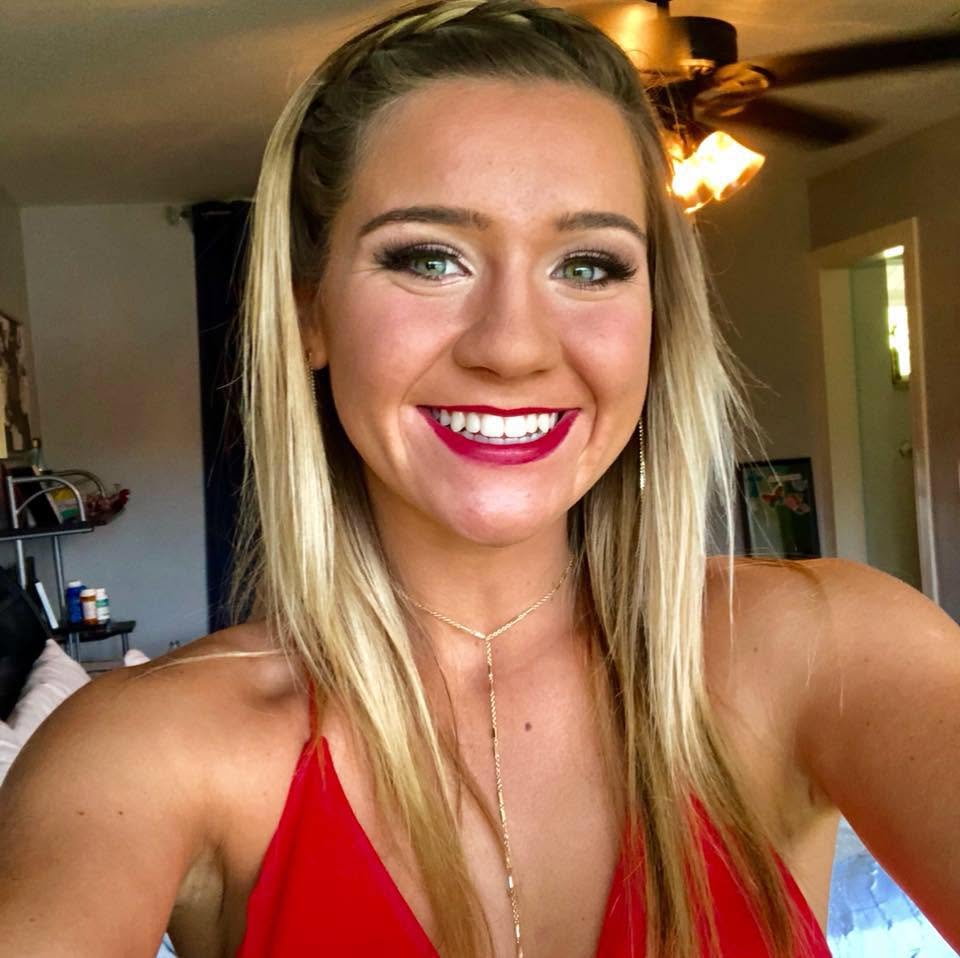
Hannah Flakus and Madison Yates were 24 and 23. Neither had sold real estate before. Neither came from sales. Both had been headed for careers in medicine and walked away from them. Within roughly a year of getting licensed, one of them was a top producer at her brokerage and the other was Rookie of the Year — and by the spring of their second year, one had already cleared $1.3 million in sales in the first three months alone.
They did it without a lead-purchase budget, without a personal brand, and without a single follower they had not earned in person. What they had instead was a small number of habits they refused to skip.
The Medical Field Detour That Turned Out to Be Training
Madison grew up in Jacksonville, went to Bishop Kenny, and earned a full ride to the University of North Florida. She planned to be a physician assistant. “Going through private school, you see the main track of doctors, lawyers, being super successful,” she said. “That’s kind of what I had in mind.”
Hannah went to Providence from kindergarten through twelfth grade, then to Florida Atlantic University in Boca Raton, where she graduated early with a degree in exercise science. She intended to become a physical therapist, shadowed the work, liked it, and then did the math on three more years of school and the student loans that came with it.
She pivoted toward nursing instead and took a job as a nursing assistant on a renal med-surg unit at a Jacksonville hospital to find out whether she would like it. She found out. She was responsible for twelve rooms at a time, and she kept getting in trouble for the wrong reason.
“I would get in trouble for sitting in people’s rooms who were lonely,” she said. “They just wanted to talk to people. They didn’t have family members coming to visit them, and I would sit in there and be like, you want to color? Let’s color. Let’s watch an episode of something on TV. And I would get in trouble because I’m sitting there almost like babysitting them, and I’m supposed to be out working. But that’s my heart.”
Neither of them recognized it at the time, but the medical field had been teaching them the exact skill real estate would demand: how to hold a conversation with a stressed adult who is about to make an enormous decision and does not fully understand the information in front of them.
“I definitely think the medical field helped me tremendously when it comes to conversation, problem solving, and active listening,” Madison said. “That is really what has gotten me into conversations where they look at me and they’re like, you’re very young, I don’t know if I should trust you with my house, my biggest investment I’ve ever made. But then I open my mouth and they’re like, you’ve been doing this for years.”
Why They Both Chose the Same Brokerage, and It Wasn’t the Split
Madison did what she had been told to do: she interviewed at several brokerages instead of taking the first offer. What separated the one she chose had nothing to do with commission structure.
“I walked in there for my interview and I had twelve hellos,” she said. “I felt like a rock star walking in there.” At the other offices she visited, the conversations were good but the building was empty. People worked from home. There was no one to be accountable to.
The second thing that decided it was that the owners did not oversell her. “They were like, hey, this is what it’s going to take. Who do you have to help you, to back you up, financially? Because I’m young and I’m getting into this, and finances are a thing when you’re starting a business. They were really real with me, and I really appreciated that.”
Both of them are blunt about the mistake they watch newer agents make.
“People get caught in and drawn to higher splits,” Hannah said. “They want that gold shiny object that’s waving in front of their face and they think it’s the best thing for them, and they get there and they realize, who has my back? Who’s teaching me how to do this? Your state exam is nothing like your business. You are studying your butt off for this one thing, the exam, and you think that when you go in, you know it all. And you do not know at all.”
Madison’s other rule for year one is financial. “Really try anything and everything, and don’t buy into everything that’s on the market,” she said. “If you’re going to buy into all of those lead programs, you’re going to go broke in your first year. Really try anything and everything that’s free and put some hard work into it, some elbow grease into it.”
The Postcard, the Door, and the 44-Year Resident
Madison’s first transaction came out of her sphere of influence. It went under contract in three days in a multiple-offer situation. Then her pipeline was empty.
With no budget, she made goodie bags and went door knocking. That is the tip she leads with: never knock empty-handed. “If you just walk up and start talking to people, they’re going to close the door in your face.”
But the door knocking was not the first touch. A week earlier, she had mailed postcards to the street over from the house she had just sold. The postcard had three things on it: the professional photograph of that listing, framed on the feature neighbors would recognize; her own face; and the price the house sold for.
When she knocked, a woman opened the door and said she recognized her. She had held onto the postcard. Then she saw the sale price, and the conversation changed. She had lived in that house for 44 years. Same bedroom count, same bathrooms, same pool, same square footage as the house that had just sold down the street.
Madison did not close on the doorstep. She offered a comparative market analysis and did the one thing most agents skip: she set a specific day and time to come back.
“It’s super important to set a day and a time you’re going to come back,” she said. “If you say I’ll come back, who knows? She could go talk to another realtor.” The homeowner later admitted she knew four or five other agents.
Madison showed up at one o’clock the next day with comps, walked the roof and the four-point items, and told the seller plainly what would need to be fixed. The homeowner signed that day.
Then she held an open house on that second listing, picked up a buyer from it, and sold a third house in the same neighborhood. Three sales, one neighborhood, twelve months.
Hannah’s Version: Show Up Where People Already Are
Hannah’s business runs on the same principle through a different door. Every agent is told to work their sphere of influence. Almost none of them can explain what that actually means on a Tuesday.
“You have to hang out where other people hang out,” she said. “You can’t rely on business just to come to you. You have to go out and get yourself out there and be around people and socialize with those people, so they can see the true you.”
For her, that meant joining a book club. A woman in that book club saw a listing Hannah and her father had taken in Deerwood, recognized the name, and called her. Hannah showed them the house. They bought it. Then she listed theirs.
The name badge is the other half of it. She wears it outside the office on purpose. At a Publix checkout, a cashier started venting about a difficult customer. Hannah listened and nodded. The cashier looked up and asked if she was a mental health therapist. At a gas station, a man kept asking her what the job was really like, whether she enjoyed it, how busy she was. She asked if he was interested in getting into the business and handed him a card.
The Age Objection, and the Answer That Works
Both of them get sized up. Both of them have decided that the answer is not to oversell.
“I always push back and say, I know I haven’t been in the business long, but I have the support system and the education that I need to make this deal successful,” Hannah said. “If I do not know something, I’m not going to beat around the bush. I’m going to go straight to my broker and to my owners and ask them the best way to handle this, and I will bring that answer back to you. I’m not going to give you an answer that’s not true just because I’m trying to show off.”
Madison’s version is about preparation. “Professionalism is everything,” she said. “Going into an open house, knowing the facts about the house. Lead with facts.” And when she does not know something, she says so and goes to look it up rather than guessing at a square footage or a bedroom count.
Their office held a roundtable on what professionalism actually consists of, and the answers were unglamorous: fill out the contract completely instead of leaving blanks, show up on time, dress for the appointment, wear the badge. “Our face is every deal,” Hannah said.
It does not always go well. Hannah is honest that she has left appointments in tears. “I’ve had customers who have made it very difficult, and I leave that appointment and I’m very emotional. I cry.” Her conclusion was not to armor up. It was to stop competing on the wrong axis. “Don’t start trying to compare yourself to other people. Be you, and if you don’t get it, it’s not meant to be.”
The Boundary That Made Her Better at the Job
The part of this that gets left out of most new-agent advice is the shutoff.
Madison expected more courtesy from clients than the business actually offers. “I thought people would have a little bit more courtesy toward, oh wow, it’s Thanksgiving, I probably shouldn’t give them a call,” she said. “No. You answer your phone.” She has spent three hours on a single call walking a buyer line by line through an inspection report, because that is what the buyer needed in order to feel safe moving forward. “I didn’t realize that I was signing up for that. But would I change it? No, because it helps build those relationships that much more.”
Hannah went the other way and set a hard stop. Early on she believed that an unanswered email at nine at night, or an online lead she did not call back within minutes, was a lost deal.
“I had to really say, I’m going to shut myself off at eight o’clock at night, because I can’t be the best real estate agent I can be tomorrow if I’m up till eleven answering emails,” she said. “Be a human and take my real estate cap off. Be a mom, be a wife, do what I need to do.”
Time blocking is the mechanism that makes it hold, and Madison is emphatic that it has to cover the whole day, not just the work. “Every section of the day is not given to real estate. You also have to time block out your life.”
What Happened Next
The episode aired in April 2024. Madison Yates is now Madison Partridge; she married that October and moved to United Real Estate Gallery, and she returned to the Real Estate Excellence Podcast in January 2026 to break down her open house process in detail. Hannah Flakus is still at EXIT 1 Stop Realty in Jacksonville and has added a luxury certification since.
The habits did not change. The postcards, the badge, the book club, the set follow-up appointment, the willingness to say “I don’t know, let me find out” — none of that requires experience, a budget, or a following. It requires showing up somewhere specific, on purpose, more than once.
For new and newer agents across Jacksonville, Jacksonville Beach, Mandarin, Middleburg, Orange Park, and the broader Northeast Florida market, that is the actual entry fee. Not the license. Not the split. Not the lead program.
“If you want to be in this business, dive in headfirst, get the training you need, stick with it, and don’t get frustrated,” Hannah said.
Featuring Hannah Flakus and Madison Yates · EXIT 1 Stop Realty · Real Estate Excellence × ReadTomato

Host of Real Estate Excellence | Mortgage Loan Officer NMLS #23368
Tracy Hayes is the host of Real Estate Excellence, a podcast dedicated to bringing you real conversations with top-performing real estate professionals across Florida and beyond.
A mortgage loan officer with nearly two decades of industry experience (NMLS #23368), Tracy brings a unique perspective to every interview — combining deep lending expertise with a genuine passion for the people and stories that shape the real estate industry.
Based in Northeast Florida, Tracy has spent years building relationships with the agents, brokers, team leaders, lenders, and coaches who are setting the standard in today's market. Real Estate Excellence is his platform for sharing their unfiltered insights with agents and real estate professionals who want to grow, lead, and succeed.
Why Jacksonville's Best Agents Think About Lifestyle First and Listings Second