Video as an Asset, Not a Deliverable: What a Film-Trained Producer Wants Northeast Florida Agents to Stop Doing
There is a moment in every conversation about real estate video where the agent says some version of the same thing: I made a few videos, nothing happened, I stopped.
Matthew Manyak has a name for what went wrong. It is not the lighting, the camera, or the agent’s face. It is a category error.
“There’s a fair amount of people that see videos as a deliverable and not as an asset,” he said.
A deliverable is a video someone hands you. You post it. You hope. Manyak calls this “post and pray.” An asset is a video built backward from a specific outcome, placed where that outcome can happen, and left to work.
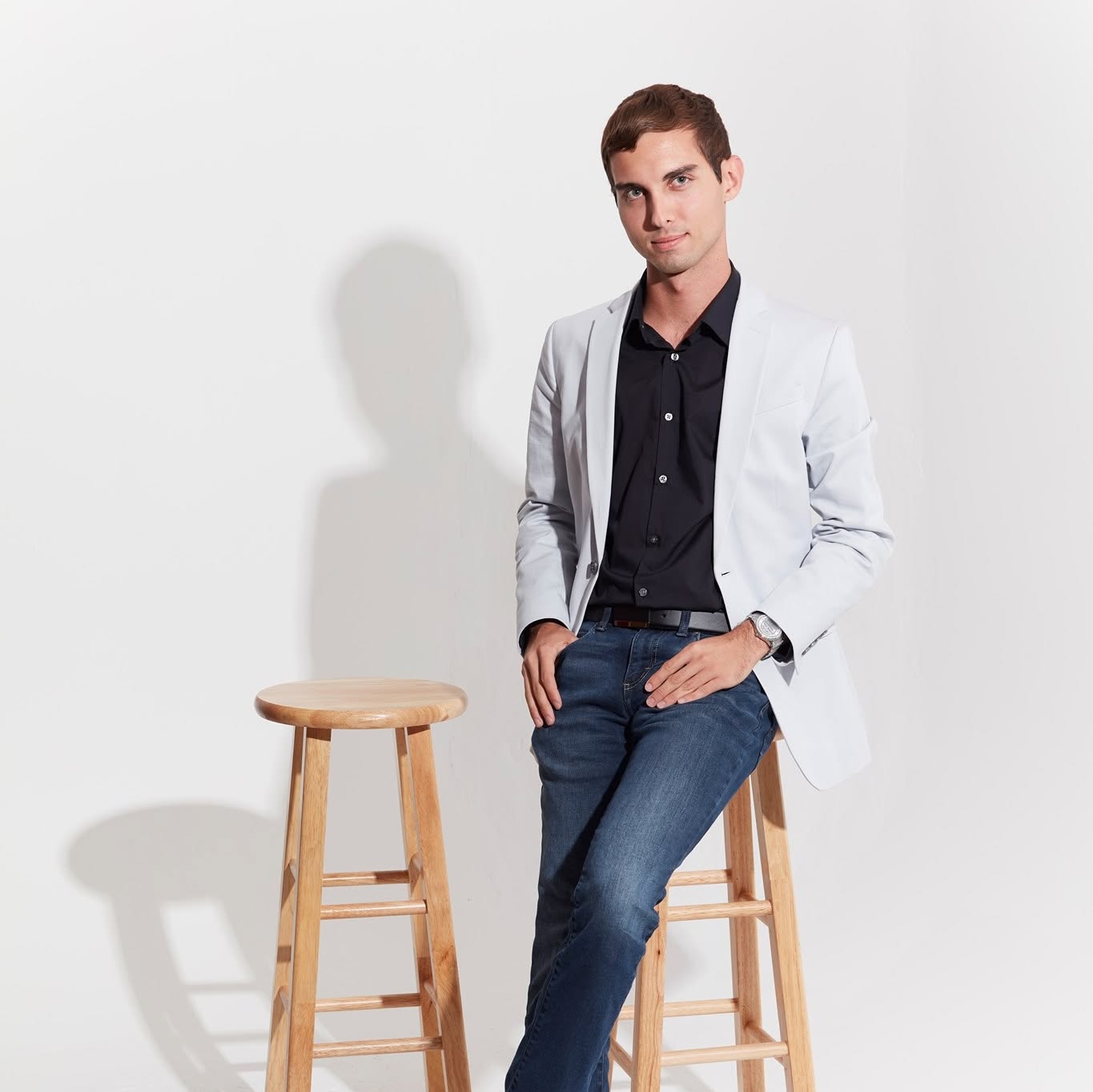
Manyak founded Double-M Digital in Jacksonville after training in cinematic arts at Douglas Anderson School of the Arts. His senior thesis short film, After the Fall, screened at the HollyShorts Film Festival at the Chinese Theatre in Los Angeles and at the All American High School Film Festival at the AMC in Times Square. He has produced work for brands including Maui Jim, Florida State, Marriott and Chevy, and self-published a novel, Wolves of the Shadowlands, in 2017. He came on the Real Estate Excellence Podcast to explain what agents get wrong about the medium.
Three years later, the stakes are higher than they were when he said it. NAR’s 2025 REALTORS® Technology Survey found that social media is now the single largest source of quality leads for REALTORS®, cited by 39 percent of members — well ahead of CRM at 23 percent, the local MLS at 17 percent, and a brokerage website at 13 percent. Seventy-five percent of REALTORS® use social media in their business. The question is no longer whether to be there.
Stop Asking Which Platform. Start Asking About Omnipresence.
The most common question Manyak gets is which platform an agent should pick.
“It’s not about one platform, it’s about omnipresence,” he said. “Repurposing content across multiple platforms is going to be the best strategy, because that way you’re not only hitting the short-term brand awareness through Instagram and TikTok, but you’re also doing the indexing for the long-term search through YouTube.”
The mechanic he described is simple and almost nobody does it. Shoot one longer piece — three to five minutes on, say, three reasons to move to a specific Northeast Florida community. Then cut each of those three reasons into its own short. One filming session now produces a searchable long-form video and three pieces of short-form content across every platform the agent uses.
The distinction between the two formats is the point. Instagram and TikTok reward the here and now; a post does most of its work in the first day. YouTube behaves like a library.
“You could do a video on Beacon Lakes today,” Manyak said. “Who knows, five years down the line someone is going to be searching for it. And they’re not going to find that on Instagram, because it’s going to be buried over the course of three, four years.”
Hayes made the same observation from the other side. A large share of Northeast Florida’s buyers are not local. They are people in other states searching for information about communities they have never seen, and they are searching on Google. An Instagram reel does not surface in that search. A YouTube video, indexed and titled properly, does — for years.
“You’ve got to look at video as a long-term asset that you’re building and growing,” Manyak said. “A lot of people think we’re going to make content, we’re going to do videos, and we’re going to see immediate results. That can’t be the case.”
Consistency Beats Production Value
Asked whether a single well-produced video builds credibility, Manyak said no, and explained why.
“From the standpoint of a single video, it’s going to give you some credibility. But if you’re consistently posting video, consistently posting content, consistently being active, that’s where the credibility comes into play. Because it shows not only that you’re a real person, it shows that you’re active in the industry.”
His own posting rhythm is three days a week — Monday, Wednesday, Friday — because his goal on Instagram is not to sell. It is to provide value and share experience. An agent whose goal is brand awareness, he said, needs to be posting in some fashion most days.
That volume is only possible one way, and it is the way the busiest producers already work: batching. Manyak’s approach with clients is a three- to four-hour session that produces twelve to twenty-four reels — enough to post every day or every other weekday for a month.
For the polish question, he draws a clean line based on shelf life. “The saying goes, done is better than perfect, and especially when you’re on social media. There are certain deliverables that we strive for that are a little bit more refined, like the company profile, because that’s going to have a much longer shelf life. But for a reel that the Instagram algorithm is going to kick out in less than two weeks, just get the information out, share the value, and start positioning yourself as that authority.”
Authority Through Association, and the Opportunity in the Margins
The strategy Manyak spent the most energy on was the one that costs nothing and almost no agent runs.
“If you’re seen with all the business owners in Jacksonville, you’re going to become like a god or goddess figure,” he said, describing what he calls authority through association. Do not just post from the restaurant. Interview the owner. They will value the additional eyes on their business, they will reshare it to their own audience, and the agent enters a circle they were never going to reach through their own following.
“That person may never give you the referral,” Hayes said, “but that three-minute video they did with you is going to now enter you into a circle.”
Then Manyak said the line that stopped the conversation cold.
“Don’t always look at your target audience, or what you think is your target audience. Look at who routinely interacts with the people that you do business with. Because there’s opportunity in the margins.”
He extended it to a play most Florida agents never think of: producing remote content with agents in the states people relocate from. New York, for one. Those agents send referrals south constantly. A collaborative video is a relationship-builder disguised as content, and it puts a Northeast Florida agent in front of an out-of-state audience that is actively planning a move.
The Company Profile: Sell the Experience Before the First Call
For small businesses and agents alike, Manyak’s flagship piece is what he calls a company profile — a longer, more polished video built around one question.
“We look at what is the customer’s journey, what sets you apart, what makes you different, and let’s really hone in on that point visually,” he said. “That way when someone watches the video, they’re not seeing the person that is acting as a client. They’re seeing themselves, and visually going through the journey of working with that business or that agent.”
The goal is explicit: to sell them on the experience of working with you before there is ever an initial inquiry.
The same principle drives his advice on listing video. He referenced a lesson from sales literature about getting a prospect to physically interact with what they are considering, and translated it for a medium where that is impossible. “When you’re thinking from a real estate standpoint, you can’t really do that unless you’re in person. So how do we bridge that gap?” His answer is emotional specificity. A living room shot in November is not just a living room. Think about the family holidays. Where does the tree go.
If You Are Bad On Camera, That Is a Directing Problem
Manyak drew a distinction that explains why so many agents have a bad first experience with video.
“I’ve seen this happen a lot of times where a videographer, quote unquote, will show up, put a camera on a tripod and say go, and then let whoever do whatever in front of the camera, whether it’s good or bad,” he said. “For me, it’s like, yeah, I’ll run the camera and set the tripod up and do the lights and all that fancy stuff. But if you’re stumbling over your words, it’s, all right, hey, let’s take a breath. Let’s think about this. What is this coming from?”
He asks questions and follows the answers, which does two things at once: it relaxes the person, and it produces audio bites and fragments of story that become future videos.
Roughly half his clients use a teleprompter and half do not, and he does not treat either as the correct answer. He uses one himself when the content is technical or detail-heavy — the kind of video where getting a square footage or a bedroom count wrong undermines everything else.
On View Counts, and Why Most Agents Quit Too Early
The reason agents stop is almost always the same. They shoot five videos, none of them cross a hundred views, and they conclude the whole thing does not work.
“Don’t strive to be better than someone else,” Manyak said. “Strive to be better than your past self.”
Then he reframed the number itself. “You might only have a handful of views, but who is watching those? You could have ten people watch one video — say it’s a listing video — and one of those people buys. Or you can have a thousand people that aren’t even from the area.”
He offered one data point from his own client work. A client in St. Pete posted essentially the same information twice: once as a caption on a photo, and the following week as a reel talking to camera. “He literally told me, listen, since we started doing reels, my inquiries have gone up by like 80 to 90 percent.”
And when someone does respond, respond back. Every time. Manyak follows up on comments days later, by name, referencing what the person said. “It’s very relationship-based and referral-based from an industry standpoint. They may not be ready to buy now, they may not be ready to buy in five years, but they may buy in ten years. If you keep that connection going through content interaction, who’s to say they won’t come to you down the road?”
The One That Cuts Through Everything Else
Late in the episode, Manyak told a story about an email he received from a videographer in Quebec who was relocating to Orlando. It was a cold outreach. It should have been ignored.
It was not, because it contained a short video, embedded, in which the sender referenced by name a specific car video Manyak had produced in Jacksonville and explained why he wanted to connect.
“He wasn’t calling out shots on me. I was like, okay, he watched the video,” Manyak said. “Be intentional and personal with those kinds of videos and they’ll work a lot harder for you.”
That is the whole thesis in one anecdote. The video was not marketing. It was a specific message to a specific person that could only have been made for them, and it got a meeting out of a stranger on a different continent.
For agents across Jacksonville, Jacksonville Beach, Ponte Vedra, Nocatee, St. Johns County, and the broader Northeast Florida market, the takeaway is not to buy better gear. It is to stop making videos that end when you post them, and start making videos that are still working for you in three years.
Featuring Matthew Manyak · Double-M Digital · Real Estate Excellence × ReadTomato

Host of Real Estate Excellence | Mortgage Loan Officer NMLS #23368
Tracy Hayes is the host of Real Estate Excellence, a podcast dedicated to bringing you real conversations with top-performing real estate professionals across Florida and beyond.
A mortgage loan officer with nearly two decades of industry experience (NMLS #23368), Tracy brings a unique perspective to every interview — combining deep lending expertise with a genuine passion for the people and stories that shape the real estate industry.
Based in Northeast Florida, Tracy has spent years building relationships with the agents, brokers, team leaders, lenders, and coaches who are setting the standard in today's market. Real Estate Excellence is his platform for sharing their unfiltered insights with agents and real estate professionals who want to grow, lead, and succeed.
Why Jacksonville's Best Agents Think About Lifestyle First and Listings Second