Jacksonville Real Estate Market 2026: What Buyers and Sellers Must Know Before Making a Move
Jacksonville Real Estate Market 2026: What Buyers and Sellers Must Know Before Making a Move
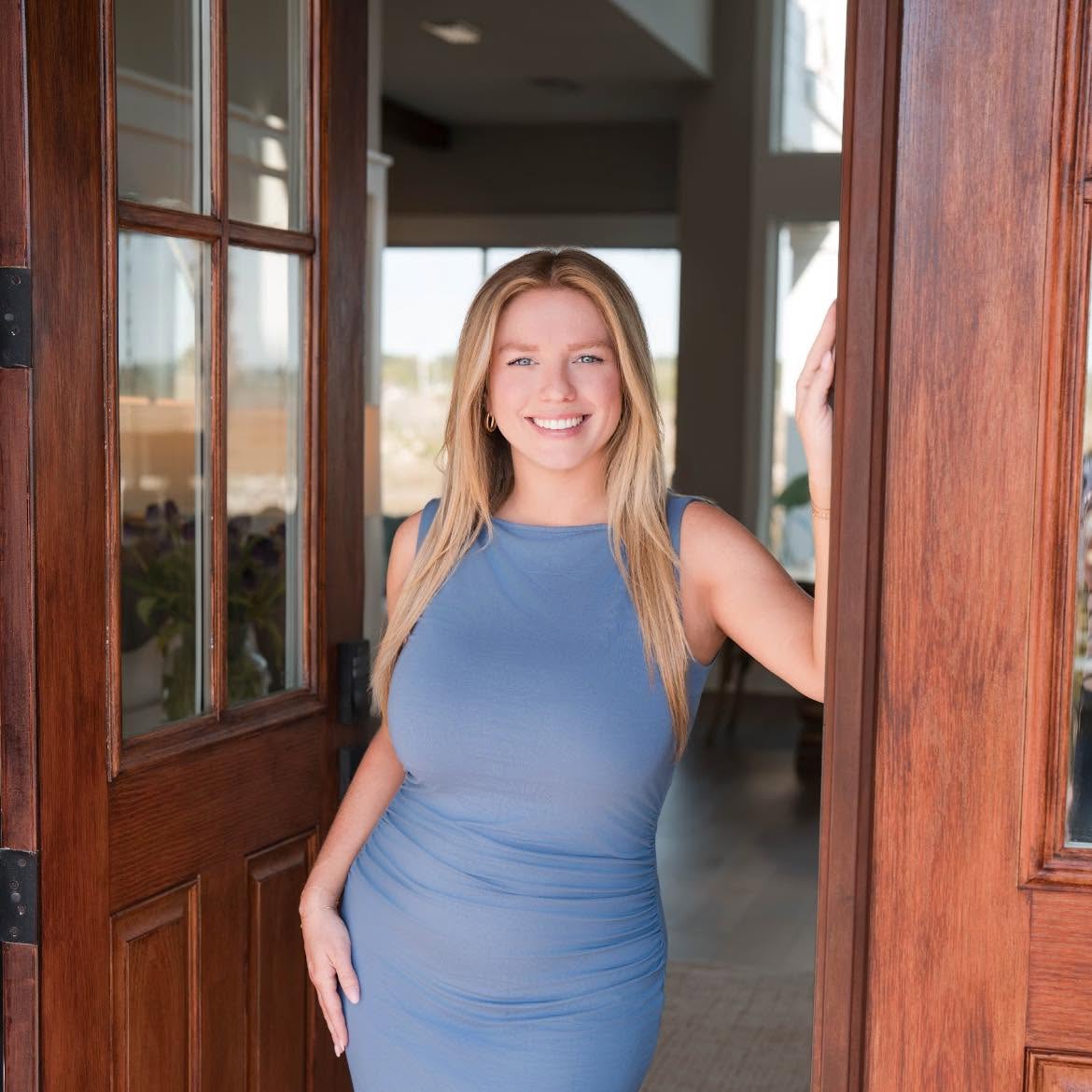
If you have been watching Jacksonville’s real estate market from the sidelines, waiting for the perfect moment, Taylor Diaz has a message for you: the moment you are waiting for may create the very competition you are trying to avoid.
Diaz, founder of TD HOMES | KW Luxury International at Keller Williams Atlantic Partners and one of Northeast Florida’s most active agents with more than 150 homes sold in five years, sat down recently to walk through the current state of the Jacksonville market with the kind of clinical clarity that comes from being inside hundreds of transactions. What she described is a market full of opportunity, nuance, and a handful of misconceptions that are costing buyers and sellers real money.
It Is a Buyer’s Market — With Conditions
As of early 2026, Jacksonville is firmly in buyer’s market territory. Diaz points to more than 9,000 active listings across the Northeast Florida MLS, representing over seven months of inventory. Days on market have stretched to 73 or more on average, and in some specific neighborhoods, properties are sitting for well over 100 days.
“We are in a much slower-paced market right now. It is absolutely a buyer’s market. We have over seven months of inventory. If I just pull up listings on the MLS, we have over 9,000 listings on market right now.”
For buyers relocating from states like New Jersey, New York, Washington, or California, where 30-day or fewer market times are still common, this can feel disorienting. Many arrive expecting the same frantic pace they left behind and are surprised to find they have time to think, negotiate, and shop carefully.
However, Diaz is quick to add a critical caveat: the buyer’s market does not apply equally to every home.
“If the house is attractive to you, it’s probably attractive to other buyers. If it’s priced appropriately and in a highly sought-after area, or it’s got bells and whistles like a large yard or a pool, it’s going to attract a lot of people. It might not sit for the average we’re seeing.”
She points to a recent listing of her own that generated multiple offers and sold for $15,000 over asking price — during a period when rates ticked slightly downward and buyers flooded back into the market almost overnight. “Flip of the switch,” she said. “Buyers came out of the woodwork.”
The Interest Rate Waiting Game: Why It Often Backfires
One of the most common conversations Diaz has with buyers in 2026 centers on interest rates. With 30-year fixed rates hovering in the mid-sixes as of late March 2026 — having crept up roughly half a percent in recent weeks amid geopolitical pressures — many buyers are choosing to wait for rates to fall further before committing.
Diaz understands the impulse, but pushes back on the logic.
“Once interest rates do drop, if they do drop, when they drop, the market’s going to go crazy. And then what happens is there’s more buyers that you’re competing against, and sales prices are going to naturally go higher. So yes, you might end up with a 6% interest rate instead of 6.5%, but the sales prices have now gone up, so you’re basically at a break even when it comes to your monthly payments.”
Her more practical framework: stop focusing on the interest rate and start focusing on the monthly payment you can genuinely sustain. Getting pre-approved for $600,000 does not mean $600,000 is the right number. The real question is what monthly payment fits your life, and then working backward from there to find the price point that lands you in that range.
She also points out that buyers who purchase now in the mid-sixes are well-positioned to refinance if rates drop meaningfully in the next 12 to 24 months, and that Fannie Mae and Freddie Mac are increasingly waiving appraisals on refinances for borrowers with strong payment histories — lowering the friction and cost of that future move.
What It Actually Costs to Sell a Home in Jacksonville
Sellers frequently come to Diaz with a number in their head — a sales price they have decided they “need” to achieve. Her first move is almost always to replace that number with a more useful one: the net proceeds after all costs are accounted for.
“A lot of sellers don’t understand what the associated closing costs are with selling a house. And sometimes they forget about commission, or mortgage payoff, or they don’t realize X, Y, and Z has to be done. And then sometimes they’re like, wow, that nets a lot lower. Or it’s a lot higher, and they’re pleasantly surprised, and we have more room to work with.”
On the commission side, the post-NAR-settlement landscape in Northeast Florida as of early 2026 still shows sellers paying approximately 3% on the listing side and around 2.5% on the buyer’s agent side, though these figures are negotiable and vary by transaction. Florida also has several closing cost customs that differ from other states — a common surprise for sellers who have previously transacted in North Carolina, California, or the Northeast.
Diaz also notes that while buyers’ market conditions do create more room to negotiate, sellers should resist the assumption that they have no leverage. Appropriately priced, well-prepared homes are still selling. The key word is prepared.
What Sellers Are Getting Wrong Right Now
In the current market, the gap between a home that sells quickly at a strong price and one that sits for months often comes down to preparation. Diaz is direct about what she is seeing.
“The buyer that’s coming in and looking at your house is probably looking at 15 other houses. They don’t want to come in and be like, okay, I’ve got to replace the carpets, I’ve got to paint the whole house, I’ve got to deep clean it. Buyers want something right now that they can just pick up their stuff, put it in there, and start their life.”
Her specific advice: repaint dingy walls, replace stained or odorous carpet, and deep clean the property before listing. These investments, often measured in hundreds rather than thousands of dollars, consistently produce faster sales and stronger offers. Conversely, sellers who skip these steps invite low-ball offers and extended days on market — both of which erode net proceeds far more than the cost of a fresh coat of paint.
Insurance: The Variable That Changes Everything
One of the most overlooked factors in a Florida real estate transaction is homeowner’s insurance, and Diaz starts the conversation earlier than most agents do.
Before a buyer even goes under contract, she frequently reaches out to her insurance contact to get a preliminary quote on a property of interest. The age of the home, the age of the roof, the location relative to flood zones, and the presence of certain construction types can swing monthly insurance costs by hundreds of dollars — materially affecting what a buyer can actually afford at a given price point.
“Insurance can drastically change monthly payments. It can really affect monthly payments by a few hundred dollars a month pending the situation. So a lot of times I will reach out to my insurance contact before we’re even under contract, just to give them a general idea.”
For homes built more than 15 to 20 years ago, this step is especially critical. Florida’s insurance market scrutinizes roof age, water heater age, and the results of four-point inspections closely — and a policy that is unaffordable or unavailable can derail a transaction that looked clean on paper.
Migration, Inventory, and Long-Term Value
Jacksonville continues to attract significant inbound migration, particularly from New Jersey, New York, Washington, and California. Diaz observes that most of her current buyer clients are relocating from out of state, and that many arrive with specific neighborhood expectations shaped by online research that does not always match the on-the-ground reality.
“There’s actually trees,” she noted with a laugh, describing the moment some buyers realize they prefer the character of established neighborhoods like Mandarin or Ponte Vedra Beach over the master-planned communities they initially targeted.
On the question of long-term value, Diaz recommends that buyers think carefully about two variables: how early they are getting into a developing community, and whether they might need to resell before that community is fully built out. Buying in the early phases of a large master-planned development like Silverleaf typically offers better appreciation potential than buying in the later phases of a more established community like Nocatee. But buyers who purchase new construction and then need to sell before the surrounding development is complete often find themselves competing directly with builder incentives they cannot match.
“You never want to buy at the top end of budget in new construction if there’s any chance you’ll need to sell in the short term,” she cautions.
Takeaway: Jacksonville’s 2026 market rewards buyers who move with intention rather than waiting for a perfect rate environment that may never arrive, and sellers who prepare their homes honestly rather than pricing on hope. The most valuable asset a buyer or seller can bring to the table is not timing — it is a clear-eyed understanding of their own financial picture and a trusted local advisor who will tell them what they need to hear, not just what they want to hear.

Host of Real Estate Excellence | Mortgage Loan Officer NMLS #23368
Tracy Hayes is the host of Real Estate Excellence, a podcast dedicated to bringing you real conversations with top-performing real estate professionals across Florida and beyond.
A mortgage loan officer with nearly two decades of industry experience (NMLS #23368), Tracy brings a unique perspective to every interview — combining deep lending expertise with a genuine passion for the people and stories that shape the real estate industry.
Based in Northeast Florida, Tracy has spent years building relationships with the agents, brokers, team leaders, lenders, and coaches who are setting the standard in today's market. Real Estate Excellence is his platform for sharing their unfiltered insights with agents and real estate professionals who want to grow, lead, and succeed.

From Fintech to Historic Homes: How Aubrey Wessolowski Built a Real Estate Career Around Finance, Design, and Deep Jacksonville Roots