19 Years, Every Market Cycle, One Philosophy: What Marissa Scott Knows About Building a Real Estate Career That Lasts

Marissa Scott did not plan to become a mentor. She planned to sell houses. But nearly 19 years into a career in Northeast Florida real estate — one that began with a Rookie of the Year award for the Florida region and has survived the 2008 crash, the pandemic surge, the rate shock of 2022, and everything in between — she finds herself in a dual role: top producer and reluctant sage to a generation of agents who are trying to figure out whether this business is actually for them.
As brand ambassador at United Real Estate Gallery in Jacksonville, Marissa trains and mentors agents regularly, including through Buffini and Company programs she is certified to facilitate. What she has observed over the past several years has sharpened her perspective on what separates agents who build lasting careers from those who exit quietly after two or three years.
The lessons she shares are not comfortable. They are honest — which, she would say, is the only kind worth giving.
The Most Common Mistake New Agents Make (and It Is Not What They Think)
When asked what she sees most consistently in agents who are struggling, Marissa does not point to a lack of training, a bad market, or insufficient technology. She points to a dependency problem.
"Most agents — I don't want to say brand new agents — they're becoming more dependent on technology, and they're not realizing, or they're forgetting, that this business is about relationship. You can't just rely on all the technology to keep that relationship."
The pattern she describes is specific: agents who attend all the trainings but never execute what they learn. Who Google every question instead of sitting with an experienced agent in the field. Who build their understanding of real estate through YouTube and social media rather than through transactions.
"The best information you'll get is when you go out there and start doing these transactions. There are some agents that will attend all the trainings, but then they don't apply it. You have to go out there and do business to apply all these things you've learned."
Marissa's prescription is direct: if you do not have a deal, find an agent who does and insert yourself into their process. Go to the inspection. Listen to the phone call. Sit in on the listing appointment if they will allow it. The information is everywhere. The experience is only in the field.
"The ones who are really on fire in this business are doing those things. But there are a lot who left their full-time job thinking it was an easy job — so they go to their first training and think, I have to sit here and do all this? I thought I was just going to make my first closing."
What the NAR Settlement Changed — and What It Exposed
The NAR settlement brought significant operational changes to the industry, and Marissa is candid about how it affected even veteran agents.
"I think one of the biggest changes I personally struggled with was the NAR lawsuit. For a veteran agent — we get set in our ways. We have been doing this for fifteen years, and then boom, in a few days, they change it. The changes are more transactional, and it's harder for me because I always think it's all about relationship."
What the settlement exposed, in her view, is the degree to which some agents had been operating on autopilot. When the process changed, the agents who had built deep relational foundations with their clients adapted. Those who had been coasting on market momentum and low friction found themselves exposed.
For new agents entering in this environment, Marissa sees both a challenge and an opportunity. The challenge is that the transactional requirements are more complex. The opportunity is that the bar for relational service — the thing that has always differentiated the best agents — has never been more visible.
Going Back to Basics Is Not a Retreat — It Is a Strategy
When Marissa encounters a slow period in her own business, she does not turn to a new CRM or a different social media strategy. She returns to the habits that built her career in the first place.
"I still have my binder — the old binder from my first year in real estate. This is before they had all the CRMs and all that stuff. I go back to what I did during my first year. Once you have that foundation, when things are not doing well, you go back to it."
That first-year mindset means treating every client interaction as if it is the most important one. It means making the calls that feel redundant. It means showing up in person when sending an email would be easier.
"I always remind myself: Marissa, just be like that agent when you first got your license. Treat it like this is the first day. A lot of new agents, their expectations are higher — they think they'll leave their full-time job, get into real estate, and make money right away."
She is careful to distinguish between the mechanics of going back to basics and the spirit of it. The goal is not to avoid technology — it is to prevent technology from becoming a substitute for the relational work that actually generates referrals, repeat business, and the kind of career that survives a decade and a half of market cycles.
On Success, Social Media, and the Danger of Comparison
One of the most quietly damaging forces Marissa observes in the current agent community is the performance of success on social media — and the anxiety it creates in agents who are comparing their private struggles to someone else's public highlight reel.
"You'll have months where it's so great. You'll have months that are so slow. I always say to agents: you're looking at people doing well on social media, and that's why you're making comments that you're so slow. But if you actually look back, you don't know that they were looking at you at some point where you were doing so good."
She is equally skeptical of agents who achieve a year or two of strong production and immediately pivot to training and coaching others.
"I want to see that person make it five years or so before I really consider them successful. I'm sorry. I can't just hang out with that person. I like to learn what they're doing, but I want to see that person make it first."
This calibration extends to how she chooses her professional community. Early in her career, she attended every networking event and industry gathering available. Now, she is selective — choosing to spend time with people who have demonstrated sustained success rather than chasing proximity to whoever is currently generating buzz.
"I get to the point in my career and my life where I know the right people that will send me positive vibes — people that I look up to, real successful people. And there's a lot of fake successful people out there. I can't just be looking at someone who's been doing this for one year and did really good."
Why Buffini — and What Makes a Training Program Worth Following
Marissa has been a Buffini and Company participant and certified trainer for years, and she is clear about why she chose that program over the many alternatives.
"Buffini doesn't sugarcoat things. He did this business. He was a struggling immigrant. I can relate to him. He applied all the things he learned along the way — not from training from somebody else, but from his experience. A lot of his training is real-life stuff that happens to Realtors."
Her broader criterion for any training program is straightforward: Is the person teaching still actively doing the work? If the answer is no, she is skeptical of the instruction, no matter how polished the presentation.
"How can you take their advice if they're not doing business? The stuff that active agents are doing to be different is what we need to learn. I don't need to hear from someone that's not doing any business."
The same principle applies to technology adoption. Marissa encourages agents to stay current — to understand what AI tools, CRMs, and video platforms are doing — but to use them in proportion.
"Stay connected with the technology and all that stuff, be well informed — but in small dosage. Because it will take away that relational quality that I've been talking about. I've seen people using AI to do their videos of themselves. It's very robotic. That's cool, but that's not you."
The Moment She Realized It Was Never Really About the Numbers
Marissa shared something during the conversation that cut to the heart of why she has stayed in this business through every cycle. She described a recent month in which she performed exceptionally well by any measurable standard. And then she got a phone call.
"I got that call from a previous client of mine from sixteen years ago, who said I inspired her — because I brought my kids to showings. She calls herself on Instagram 'Closings and Car Seats.' She said it was because of me. I used to show properties with my kids."
That call, she said, meant more than any ranking, any award, any production milestone.
"I get to the point in my career where it's not about numbers, it's not about rankings. Those moments mean so much more to me now. And I'm not neglecting the accomplishments — but it's just changed my perspective."
She carries that same ethos into every transaction. When a deal falls apart — as one recent listing at Jacksonville Beach did, costing her a relationship with a close acquaintance who would not accept her pricing guidance — she does not shrug it off as business. She feels it.
"When you pour your heart and your soul and everything into a transaction, that's not just business for me. That's very personal. That's why it hurts when we don't get the job done."
What She Would Tell Herself on Day One
Asked what she knows now that she wishes someone had told her when she passed her exam, Marissa's answer is grounded in financial discipline and emotional preparation.
"Be more realistic. Have the right expectation that this career, this business, is so cyclical. When I was newer, I thought it would just be money, closing after closing. I was a one-day millionaire. But I didn't prepare for the slow season. Save for the slower months so you're not sitting there looking at others and saying, my business sucks."
And beyond the financial, she returns to faith — a foundation that has underwritten her approach to uncertainty throughout nearly two decades in a business that does not come with guarantees.
"If anyone doesn't have faith, it's part of your foundation. I can't thank God enough for every blessing — even giving me peace during times of uncertainty. You can't get that anywhere else."
The Takeaway
Marissa Scott's career is not remarkable because she survived difficult markets. It is remarkable because she built something durable enough to survive them without losing who she is in the process. The relationships, the honesty, the willingness to go back to the binder from year one — these are not soft skills. They are the infrastructure of a business that can outlast any rate cycle, any lawsuit, any market correction.
For every agent who is wondering whether this business is worth staying in — and for every client deciding whom to trust with the largest transaction of their life — her 19-year career offers a simple but demanding answer: it is worth it, if you are willing to do the work that cannot be Googled.
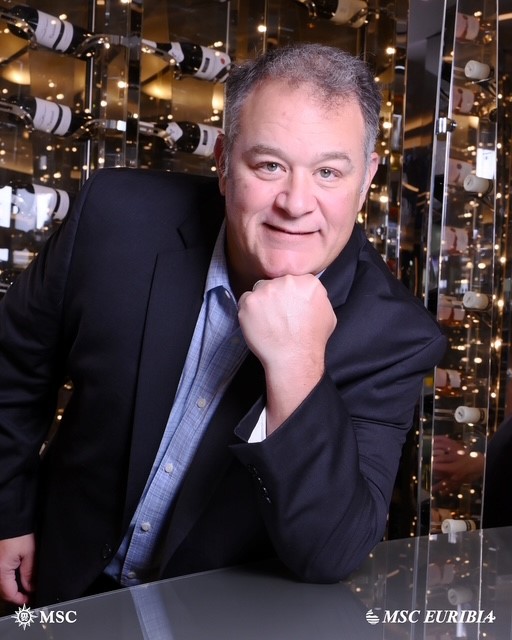
Host of Real Estate Excellence | Mortgage Loan Officer NMLS #23368
Tracy Hayes is the host of Real Estate Excellence, a podcast dedicated to bringing you real conversations with top-performing real estate professionals across Florida and beyond.
A mortgage loan officer with nearly two decades of industry experience (NMLS #23368), Tracy brings a unique perspective to every interview — combining deep lending expertise with a genuine passion for the people and stories that shape the real estate industry.
Based in Northeast Florida, Tracy has spent years building relationships with the agents, brokers, team leaders, lenders, and coaches who are setting the standard in today's market. Real Estate Excellence is his platform for sharing their unfiltered insights with agents and real estate professionals who want to grow, lead, and succeed.
From Fintech to Historic Homes: How Aubrey Wessolowski Built a Real Estate Career Around Finance, Design, and Deep Jacksonville Roots