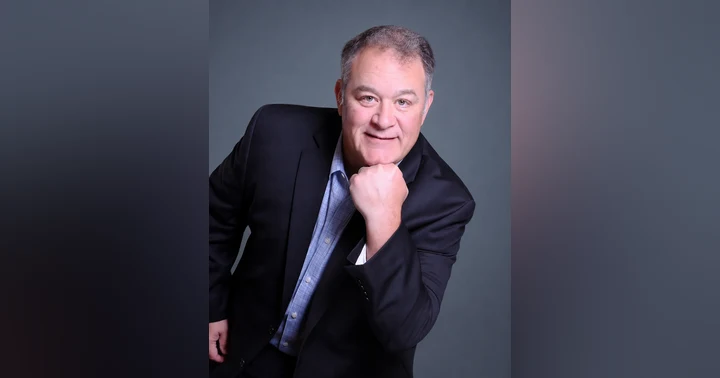
What Closing Tables in Northeast Florida Are Missing — And Why Megan Lopez Has Made It Her Mission to Fix That

What Closing Tables in Northeast Florida Are Missing — And Why Megan Lopez Has Made It Her Mission to Fix That
The title industry has a visibility problem. The work that keeps real estate transactions clean, legal, and financially sound happens almost entirely out of sight — behind search requests, lien releases, underwriting decisions, and escrow reconciliations that most buyers never know exist until something goes wrong. Megan Lopez, Agency Account Manager for Fidelity National Financial, has spent her career on that invisible side of the closing table. And the more time she spends there, the more convinced she becomes that the single biggest threat to buyers, sellers, and agents in Northeast Florida is not the market, not the interest rate, and not the competition. It is the gap between what people assume is protecting them and what is actually protecting them.
"The owner's policy protects the homebuyer," Megan said during her appearance on the Real Estate Excellence Podcast. "The lender's policy protects the lien interest of the mortgage company. They're not the same, and they provide two separate coverages."
That distinction — simple, direct, and almost universally misunderstood — is the conversation Megan has been trying to move from the closing table into every agent training, every buyer consultation, and every title company meeting she walks into.
The Optional That Is Not Really Optional
Every Florida closing statement carries a line that does more quiet damage than almost anything else in the transaction. It reads: Owner's Title Insurance Policy — Optional.
Buyers see it. Agents mention it. And most of the time, the conversation ends there.
Megan does not let it end there. The owner's policy, she explains, is the only protection in the transaction that covers the buyer against everything that happened to a property before they owned it — unknown heirs claiming a share of an estate, forged signatures in a prior deed, unpaid contractor liens that followed the property through the sale, recording errors that created competing ownership claims. The lender's policy covers none of this on the buyer's behalf. It covers the bank. The bank has its own attorneys. The buyer, without an owner's policy, has nothing but their own legal fees.
"If an owner doesn't get an owner's policy, they could potentially lose their interest in the property because it turns out someone else had a legitimate ownership claim," Megan said. "Their protection is up to the amount of the policy, which is generally based on the purchase price."
New construction buyers present a version of this conversation that Megan finds particularly frustrating — not because they are being careless but because they are applying a logic that feels reasonable on its surface. Nobody else owned this home. Why would title insurance matter?
The answer is mechanics' liens. Builders regularly close homes before every subcontractor invoice has been paid. The drywall crew, the HVAC installer, the electrician — any of them can file a claim against the property after closing. Without an owner's policy, that claim belongs to the new owner. With one, Fidelity National Financial steps in and resolves it.
The owner's policy is a one-time fee, calculated on the purchase price, paid at closing, and it covers the homeowner for as long as they own the property. In Florida the rate is set by the state. There is nothing to negotiate, nothing to comparison shop, and no renewal premium. Given what it covers, it is one of the most straightforward values in any real estate transaction — and it is being skipped by buyers who do not fully understand what optional means in this context.
Fraud Is No Longer the Edge Case
If the owner's policy conversation is the one Megan has been trying to move upstream for years, fraud is the one that has moved upstream on its own — because the industry left the door open and the criminals walked through it.
Megan was asked on the podcast what the largest category of title claims looks like right now at Fidelity National Financial. She did not hesitate.
Fraud.
Not recording errors. Not unknown heirs. Not mechanic's liens. Fraud — and it is generating the largest individual claim losses the company processes because the policy covers up to the full purchase price of the home.
The pattern Megan describes repeats itself with enough consistency to constitute a playbook. A fraudster identifies a property using public records — free, accessible, and searchable online. The target is typically vacant land, a free-and-clear investment property, or an absentee-owned parcel whose legitimate owner has no reason to be monitoring it closely. The fraudster poses as the owner. They contact an agent. They provide falsified identification. They price the property slightly below market to generate urgency and attract cash buyers who will not involve a lender — and therefore will not trigger the standard due diligence a lender requires.
The transaction closes. The buyer believes they own the property. The real owner surfaces. And the title claim that follows is not a small administrative correction. It is a total loss on the buyer's investment that Fidelity's underwriting team must cover.
"We know it's probably happened," Megan said when Tracy Hayes raised the question of buyers who have been caught on the wrong side of this. "A lot of times owners say, 'Why do I need an owner's policy? Nobody owned it before.' And if you're not protected, you can essentially be on the hook for that."
The agent's role in stopping this before it reaches the title company is more significant than most agents realize. Megan's list of red flags reads like a behavioral checklist more than a technical one — a seller who communicates only by phone or email and refuses to get on a video call, a quick close with no clear explanation, a cash transaction on a property priced below what the market would support, and a request to use a specific notary the agent has never heard of. None of these elements in isolation stops a transaction. Any combination of them should.
"Get on a video call with them," Megan said. "Sometimes that'll scare them right off the bat."
Wire Fraud Has a Simple Prevention — and Most Buyers Skip It
Of all the fraud categories Megan tracks in her daily work with title companies and law firms across Northeast Florida, wire fraud is the one she addresses most consistently in her education sessions — because the prevention is almost embarrassingly straightforward, and the loss when it is skipped is almost never recovered.
Fraudsters do not break into systems. They infiltrate email accounts — standard consumer platforms like Gmail and Yahoo — and read the transaction as it unfolds. They learn the parties, the timeline, the title company, and the wire date. Then, right before closing when everyone involved is under pressure and moving fast, they send instructions that look like they came from the title company. Same logos. Same tone. A different account number.
The FBI's Recovery Asset Team froze $679 million of $1.16 billion in wire fraud attempts in 2025 — a 58% recovery rate. The other 42% is gone.
"Make sure you are calling a known trusted phone number to verify every wiring instruction," Megan said. "Every single time. No exceptions."
That call — to a number already on file, not one pulled from the email — is the entire prevention. It costs nothing. It takes two minutes. And when Megan conducts lunch-and-learns for the real estate and lending partners of the title companies she serves, this is the moment in the room where people visibly pause.
Most of them have never been told this clearly before.
The Infrastructure Behind the Policy
What Megan represents in the market — and what agents and title companies in Northeast Florida gain when they work with an FNF-backed operation — is not simply a policy from the nation's largest title insurance underwriter. It is the infrastructure that surrounds that policy.
FNF's Search and Production team performs the title search. Their underwriting team supports complex transactions that smaller operations could not handle. Their account managers provide ongoing education, fraud prevention resources, quality control, and monthly escrow reconciliations that catch discrepancies before they become losses. When a title company encounters something they have not seen before — a probate situation with competing heirs, a commercial transaction with layered ownership, a fraud attempt that does not quite fit the standard profile — Megan's job is to be the resource they call.
"My job is only as easy as the people behind me," she said. "Our underwriters, our search and production team — they make my job a million times easier, especially when I'm forward-facing with title companies and law firms."
For title companies in Northeast Florida that are not currently working with FNF, Megan's question is direct: what resources are they drawing on when something goes wrong? Because in the current fraud environment, the question is not whether something unusual will come across a closer's desk. It is whether the underwriter behind their policy has the depth to handle it when it does.
The closing table has always been the moment when a real estate transaction either holds or falls apart. Megan Lopez has spent her career making sure the people sitting at that table — on every side of it — understand what is protecting them, what is not, and exactly what they need to do about the difference.
Featuring Megan Lopez · Fidelity National Financial · Real Estate Excellence × ReadTomato

Host of Real Estate Excellence | Mortgage Loan Officer NMLS #23368
Tracy Hayes is the host of Real Estate Excellence, a podcast dedicated to bringing you real conversations with top-performing real estate professionals across Florida and beyond.
A mortgage loan officer with nearly two decades of industry experience (NMLS #23368), Tracy brings a unique perspective to every interview — combining deep lending expertise with a genuine passion for the people and stories that shape the real estate industry.
Based in Northeast Florida, Tracy has spent years building relationships with the agents, brokers, team leaders, lenders, and coaches who are setting the standard in today's market. Real Estate Excellence is his platform for sharing their unfiltered insights with agents and real estate professionals who want to grow, lead, and succeed.
Why Your Transaction Coordinator Should Feel Like a Business Partner, Not a Paper Pusher