How Angela Stancil Built a Real Estate Business That Ran Itself Through Cancer Treatment, And What Every Agent Can Learn from It
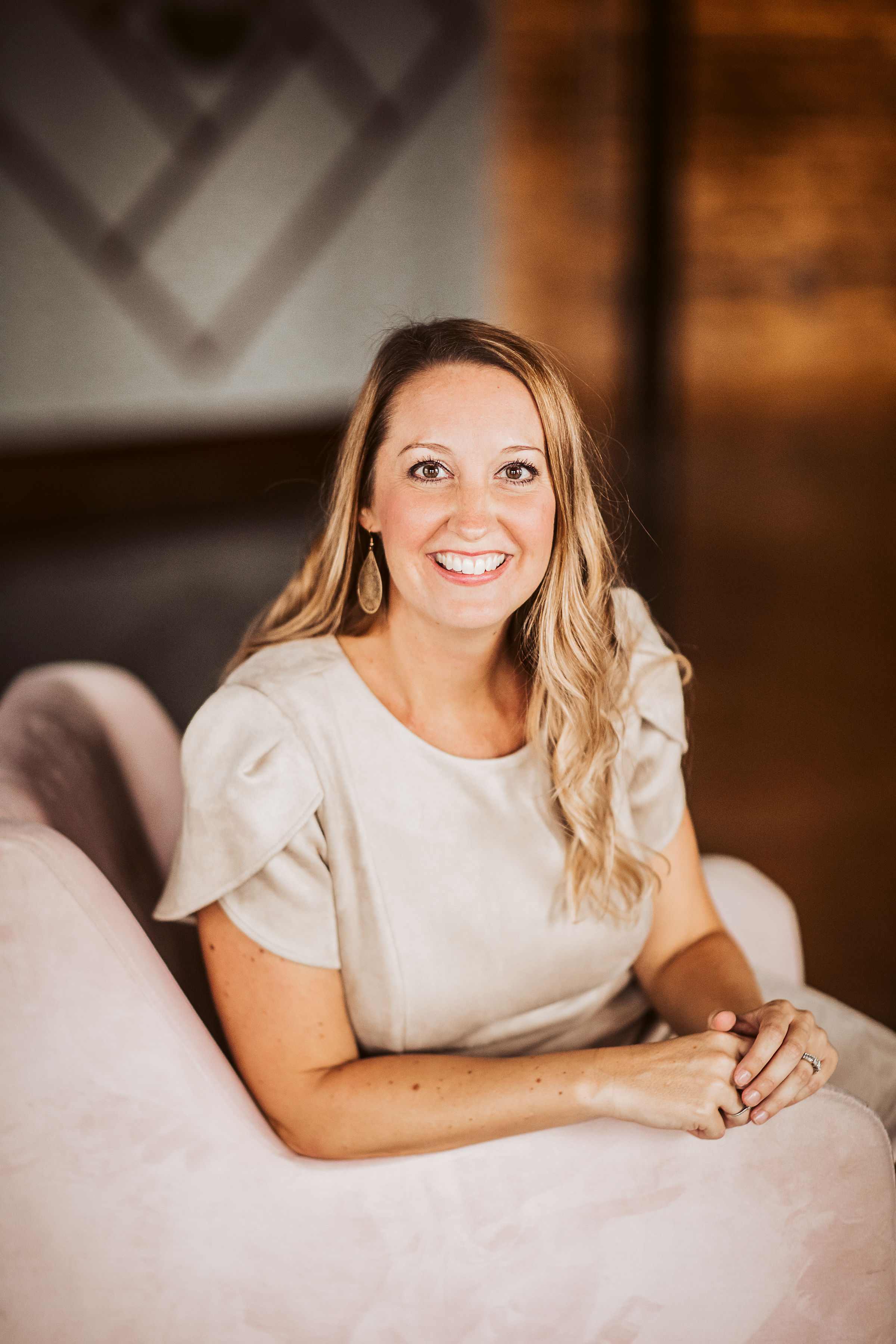
In the real estate industry, the phrase "building a business" is used constantly and defined rarely. For Angela Stancil, a top-producing agent with Team Davidow at Coldwell Banker Vanguard Realty in Fleming Island, Florida, the definition became unavoidably concrete during a two-year battle with cancer that included 16 rounds of chemotherapy, a double mastectomy with lymph node involvement, 25 rounds of radiation, and three additional surgeries. Her business did not collapse. It ran.
Not at full volume. Not without sacrifice. But the transactions that needed to close did close. The clients who needed coverage got it from teammates who shared the same training, the same vendor relationships, and the same values. The marketing that needed to go out went out. And when Angela was able to return, her pipeline, her CRM, and her client relationships were intact.
The systems that made this possible are not complicated. But they require a commitment that most agents delay until a crisis forces the issue.
Why Most Agents Hit a Ceiling at $7 to $10 Million
Before diving into the specific systems Angela uses, it is worth understanding why so many capable agents plateau. The pattern is almost always the same: a driven individual builds a client base through sheer effort, stays personally involved in every detail of every transaction, and eventually runs out of hours in the day. They are doing everything themselves—the marketing, the client follow-up, the CRM management, the closing coordination, the pop-by gifts, the customer appreciation events—and the ceiling they hit is a time ceiling, not a talent ceiling.
"Not just new agents," Angela said on the Real Estate Excellence Podcast. "It could be agents who are ready to grow, agents who could do more transactions but can't figure out how because they don't have their systems in place to let things flow. They're doing every single thing on their own."
The solution Angela learned from her team leader, Amy Davidow, is delegation—not as a luxury, but as a business strategy. Amy began delegating to Angela in 2018 when Angela joined as an unlicensed assistant. The effect was immediate: Amy's capacity for client-facing work expanded because she was no longer carrying the administrative load. Her business grew. And Angela, absorbing the operational knowledge from the inside, built her own version of the same system when she got her license in 2019.
The First Hire: Transaction Coordinator Before Assistant
When agents ask Angela which hire to make first, her answer is clear and grounded in practicality.
"I would say the transaction coordinator would be the first hire," Angela explained. "And that is because the transaction is more important than the pretty marketing things at first. If you need your business to go and flow and work, and the money to come in so that you can do the pretty things, you need someone to help on that back end with timelines, with making the calls, with getting things done."
A transaction coordinator handles the pipeline of active files: deadlines, document collection, lender communication, inspection scheduling, and the dozens of moving parts that consume an agent's attention during the critical weeks between contract and closing. When an agent is driving a relocation client around for three days of showings, someone needs to be watching the appraisal on an existing listing. That someone is the transaction coordinator.
The assistant comes second, and her role is different: staying top of mind with past clients, planning events, managing the CRM, executing monthly mailers, coordinating pop-by gifts, and handling the logistics of the relationship-maintenance work that generates referrals but does not require a licensed agent to execute.
What a Good Assistant Actually Does
Angela hired her own dedicated assistant in 2022, two years into doing her own transactions. The timing raised eyebrows—she was a second-year agent—but the logic was sound. She had already been producing at a volume that justified the investment, and she understood from watching Amy that delegating administrative work was the only way to grow without burning out.
Her assistant is a 1099 contractor, not a full-time employee. She is paid a base amount plus project-based or hourly compensation for specific tasks. They meet once a week for a few hours. The rest of the time, the assistant works independently, completing standard weekly assignments on her own schedule.
Those standard assignments include managing and cleaning the CRM, preparing the front pages of real estate reviews for clients at the six-month and annual marks, coordinating monthly mailers from design through printing and postage, setting up pop-by deliveries, and managing logistics for customer appreciation events.
"You want to be there talking. You wanna be there hugging their babies and remembering all their names, and their grandma, and their aunt that is coming into town," Angela said. "And your assistant is handling the tickets, making sure they have the popcorn ready."
The assistant also serves as an editorial check. Because she is not licensed and does not work in real estate, she reads marketing materials the way a client would read them. When jargon creeps in, she flags it. When a mailer is confusing, she says so. Angela describes this outside perspective as invaluable for keeping communications genuinely useful to the families they serve.
The Monthly Mailer, the Pop-By, and the "I Know A Guy" Guide
Angela's marketing philosophy is built around one core objective: staying present in clients' lives in a way that feels helpful rather than promotional. Three tools anchor this approach.
Monthly mailers go out consistently, covering topics that range from seasonal home maintenance to ladybug infestations to local summer bucket lists. Each mailer is educational, personalized to reflect the agent's personality, and designed so that a non-real estate reader finds it genuinely useful. The team creates a shared framework and each agent tailors her section to her own clients and interests.
Pop-bys—small, thoughtful gifts delivered in person to past clients—keep Angela physically present in the neighborhoods where she works. Her assistant handles the logistics, which frees Angela to stay on the phone negotiating or coordinating while the delivery happens. The assistant also keeps Angela's enthusiasm in check: "We have three in the closet, Angela. Don't buy another pop-by. Let's get this pop-by done."
The "I Know A Guy" guide is a living document maintained on the team's website and distributed as a printed pamphlet. It lists vetted local vendors across dozens of categories—fencing, general contracting, epoxy flooring, home inspectors, and more—updated regularly as vendor relationships change. The guide exists because Angela and her teammates know that a client who trusts them with their home purchase will come back to them for vendor recommendations for years afterward. Providing those recommendations in an organized, reliable way is part of being a realtor for life.
"If we wanna be a lifelong realtor, if they're doing something major to their house, a bathroom renovation, we want it to be good. We want the work to be done well so that we can sell it in the future."
Customer Appreciation Events: The Movie Night Model
Team Davidow's customer appreciation events have become a signature of their brand in Clay County. The movie night is Angela's favorite. The team rents out the largest available theater, coordinates with a vendor partner through the LoLo local love coupon program, themes the event around a current film, and invites clients across all five agents on the team.
The Minions movie night featured a teammate in a blow-up Minion costume taking photos at a branded backdrop. The Aladdin event brought in a professional Jasmine princess. Goodie bags, coupons for free popcorn and drinks covered by the team, and vendor partners present in the lobby all contribute to an experience that clients photograph and post on social media—tagging the team in images that reach their friends and family organically.
"Every other year we do a family-friendly one and then an adult-only one, because we have different clients and different people," Angela said. "I'm very family-centered. I just feel like I work with who I am."
Vendor partners co-sponsor the events, reducing the cost and creating an opportunity for lenders, title company representatives, and insurance brokers to meet the clients they worked with during closings—many for the very first time.
Team Culture as a Business Asset
The infrastructure Angela describes would be meaningless without the team culture that makes it function under pressure. Team Davidow operates on a principle Angela describes as "all for one and one for all." The five agents on the team work different territories, serve different client profiles, and bring different personalities to the work. What they share is a common training foundation, a common approach to client care, and a genuine investment in each other's success.
"She is my team lead, but she's not my boss," Angela said of Amy Davidow. "She is the wealth of knowledge. She is the one that can connect us and find the new things that we wanna go and train on. But we are just as much with the ideas."
This distinction matters. A team where the leader dictates and agents execute is fragile—dependent on the leader's presence and energy. A team where every agent owns the mission and contributes to the strategy is resilient. When Angela was undergoing treatment, her teammates did not simply cover her files. They covered them the way she would have covered them, because they had all been trained the same way and held the same standards.
"I knew that when I had somebody open the door, they were gonna notice the same things that I notice," Angela said. "They use the same vendors. So when I was like, 'Hey, I've already shown the house. We're under contract, but can you help set up the inspection?' It was just easy to communicate with the team."
The Lesson That Cancer Made Impossible to Ignore
Angela is careful to give credit where it belongs. The systems she used to survive her illness did not originate with her. They came from Amy Davidow's model, from broker Kim Knapp's consistent encouragement, from the Ninja Selling program introduced through Coldwell Banker, and from the team's annual rallies and ongoing training culture. Angela's contribution was to take those systems seriously from the beginning and build her own version with genuine fidelity to the underlying principles.
The result was a business that could operate without her at full capacity for two years. Not perfectly. Birthday cards were missed. Real estate reviews did not always go out on schedule. Social media posting fell off. But the transactions closed. The clients were served. The referrals kept coming.
"The building blocks and the foundation of your business are so much more important than your business card," Angela said. "If you wanna last through COVID, through illnesses, through changes in the team, through changes in everything the real estate world was—just being able to bounce back from all of those things is because your foundation is strong."
For agents who are doing everything themselves and wondering why growth feels impossible, Angela's story offers a clear and hard-won answer. The ceiling is not your talent. It is your infrastructure. Build the foundation now, before you need it. Because the moment you need it most is rarely the moment you have time to build it.
Featuring Angela Stancil · Coldwell Banker Vanguard Realty · Real Estate Excellence × ReadTomato

Host of Real Estate Excellence | Mortgage Loan Officer NMLS #23368
Tracy Hayes is the host of Real Estate Excellence, a podcast dedicated to bringing you real conversations with top-performing real estate professionals across Florida and beyond.
A mortgage loan officer with nearly two decades of industry experience (NMLS #23368), Tracy brings a unique perspective to every interview — combining deep lending expertise with a genuine passion for the people and stories that shape the real estate industry.
Based in Northeast Florida, Tracy has spent years building relationships with the agents, brokers, team leaders, lenders, and coaches who are setting the standard in today's market. Real Estate Excellence is his platform for sharing their unfiltered insights with agents and real estate professionals who want to grow, lead, and succeed.

The St. Augustine Buyer's Guide: Insurance, CDDs, Short-Term Rentals, and What Only a Local Agent Can Tell You