Selling Homes Near Naval Station Mayport: Allison Chance's Insider Playbook for Military Buyers and Sellers

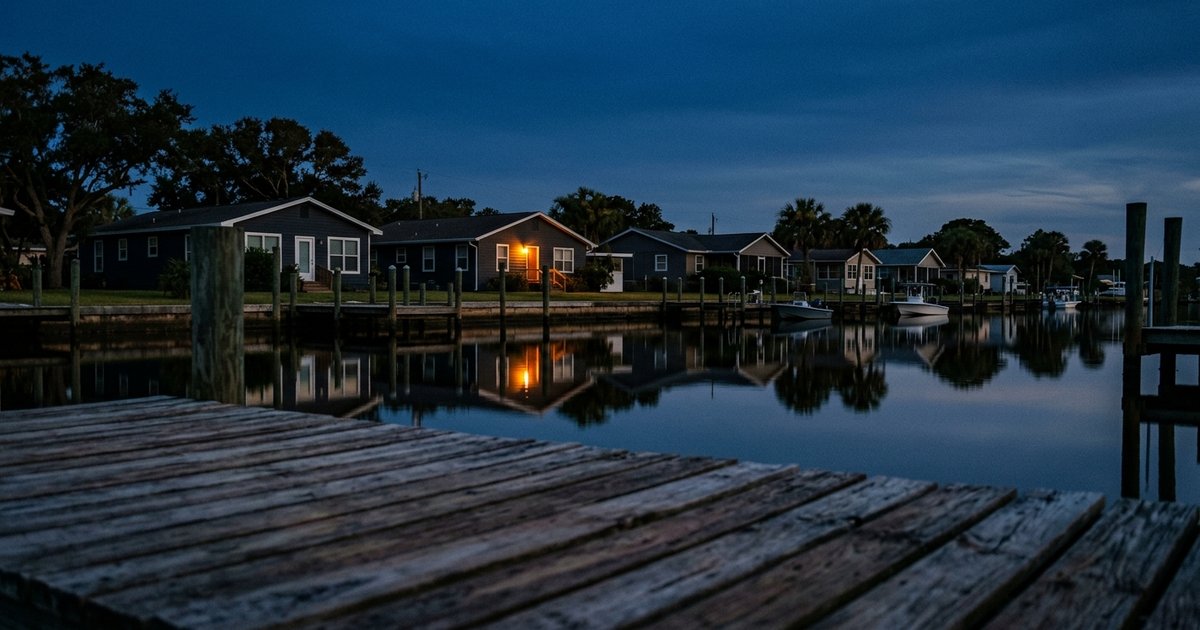
Selling Homes Near Naval Station Mayport: Allison Chance's Insider Playbook for Military Buyers and Sellers
For most buyers, purchasing a home is the largest financial decision of their lives. For military families receiving Permanent Change of Station orders to Naval Station Mayport or NAS Jacksonville, it is often one of the most compressed, high-stakes, and emotionally loaded decisions imaginable. They may have weeks to choose a neighborhood, a school district, and a mortgage product. Their spouse may be deployed. They may be pregnant. They may be arriving from Guantanamo Bay or Japan with almost no local knowledge and a rental clock already ticking.
Allison Chance has navigated that scenario more times than she can count. As the founder of Anchored Real Estate Group, a Jacksonville-based team with deep roots in the military community, and as a navy wife who has personally bought and sold property under PCS orders, Chance brings a lived fluency to military relocation that no algorithm can approximate.
“You’re not just with us to purchase a home or to sell a home,” she told host Tracy Hayes during a recent episode of the Real Estate Excellence podcast. “You’re with us, on the purchase side especially, to build your life. We’ve done all the hard work.”
What follows is a detailed look at how Chance approaches every military buyer intake, every VA loan negotiation, and every new construction conversation, drawn from her own words and more than a decade of frontline experience in Northeast Florida real estate.
The Intake Call: Every Question Has a Purpose
Chance begins every buyer relationship the same way, regardless of how the lead arrived: by asking how they found her. It seems simple, but the answer shapes everything that follows.
“One of the first questions I ask when I get on a call with a buyer or a seller is, how did you hear about us?” she explained. “It helps guide my direction of how I’m going to take the call.”
For military clients, the next question is equally targeted: where are you going to be working? Jacksonville is home to two major installations with very different geographic footprints. NAS Jacksonville sits off Highway 17 near Orange Park and Clay County, while Naval Station Mayport is positioned at the northeastern edge of Atlantic Beach. A buyer commuting to NAS Jax who purchases near Mayport is adding meaningful daily drive time to an already demanding schedule. Getting this right at the intake stage prevents weeks of misdirected house hunting.
From there, Chance moves into school priorities, activity preferences for children, and, critically, the client’s honest relationship with the idea of a commute. “What I think is a far commute may not be a far commute for the buyer,” she noted. “They might have been doing a commute in DC where they were in the car for three hours every day. So they want to live in St. Johns County, and they don’t care about the commute.”
She also surfaces hyper-local preferences that no search filter captures. A recent client asked about ice hockey rinks. Because Chance’s son has a friend who plays, she knew exactly where to point them. “I play matchmaker,” she said, “in the sense that I try to tell people, here’s what you can do. I’ve done all the hard work.”
The VA Loan Conversation Most Agents Are Not Having
Chance is blunt about a persistent problem she encounters in the market: agents, on both sides of a transaction, who do not understand the VA loan well enough to represent their clients properly. The consequences are not trivial. They can cost buyers their dream home or saddle them with a financial structure that does not serve their long-term interests.
Her core insight on VA loan negotiation is one she has had to explain, patiently and repeatedly, to listing agents who should already know it: for a VA buyer, negotiating on purchase price is almost always the wrong move. Negotiating for seller-paid closing costs is almost always the right one.
“It is the same net to the seller, whether we do this with this or this with this,” she said. “Monthly payment versus cash in hand — it is completely different for a buyer. And I’ve had to explain multiple times to agents who do not know what they’re doing or are not educated on this.”
The knock-on benefit for the seller’s neighborhood is equally underappreciated. When a VA buyer accepts a full list price in exchange for closing cost credits, the recorded sale price preserves comparable values for every neighbor on the street. A reduced purchase price chips away at those comps. “Your neighbors will be really happy with you,” she tells listing agents who push back, “because you didn’t take a low-ball offer.”
Chance also raises the VA Energy Efficient Mortgage provision, a tool that allows buyers to roll up to a certain amount of energy efficiency improvements into their loan, with most of her VA clients. “I believe it’s $6,000,” she said, noting that in her experience, most buyers are not being told about it. “It rolls into the loan. It’s part of the loan. But it’s like, hey, this is an expense that you might have, and it’s going to minimally change the payment.”
Her WDO expertise is another differentiator. Wood Destroying Organism inspections carry specific VA appraisal requirements that can sink a deal on a property with compromised siding, deck connections, or structural wood exposure. Chance caught one such issue — T-111 siding showing significant rot — before her buyers got emotionally attached. “I knew we’d get under contract and then we’d have a problem,” she said. She showed them the issue on the walkthrough, managed their expectations, and ultimately guided them to a stronger property. That is the kind of expertise that only comes from volume.
The New Construction Warning Every Military Family Needs to Hear
With builder activity ongoing across Clay County, St. Johns County, and Nassau County, new construction remains a popular option for military buyers seeking modern finishes, warranty protection, and builder incentives. Chance is not opposed to new construction. She sells it regularly. But she has a precise and urgent warning for any military family who pulls into a model home community without a buyer’s agent.
“People rarely start the process how they should,” she said. “They start where they see the house they want, and then we have to work backwards. There is so much that goes into new construction.”
The financial mechanics are often misunderstood. Many buyers assume that arriving without a buyer’s agent gives them negotiating leverage or reduces the purchase price by eliminating a commission. Chance dismantles this assumption directly.
“If Tracy and I go into a model home to buy the same house, and Tracy is unrepresented and I have a Realtor, Tracy and I are paying the same amount for the house,” she explained. “The real estate commission is not necessarily tied to that purchase. It’s a marketing budget that the builder has.”
What a skilled buyer’s agent can do, and what a site agent working for the builder cannot, is negotiate the structure of the deal in the buyer’s favor. Chance recently secured full closing cost coverage for a VA buyer at a new construction site after a site agent told the buyer a 5% deposit was non-negotiable. The deposit dropped to $3,000. “At the end of the day, all of their closing costs are going to be covered by the builder,” she said. “Why are they going to put all this money out and have it sitting in an escrow account for the next couple of months?”
Her other standing warning for military buyers in new construction communities concerns long-term resale. If a builder will still be putting up new inventory in the same subdivision when a service member receives their next PCS orders, that buyer will be competing against brand-new homes at closing. “Are you going to get new orders in two or three years?” she asks her clients directly. “Because they’re going to be building here for five or six more years. And you’re going to be battling against that when you try to sell.”
The solution, in many cases, is to frame the purchase not as a forever home but as a rental investment. A new construction home with a builder rate buy-down, low insurance costs, and a manageable monthly payment can be highly attractive to future renters. “That’s going to be attractive to a renter coming in,” she said. “I try to take my knowledge of being a real estate investor and landlord to explain to buyers what you can do.”
Beyond the Sale: Concierge Service as a Military Community Investment
The intake call, the VA loan strategy, the new construction conversation: all of it is in service of a larger goal that Chance articulates with genuine conviction. She is not just helping military families buy houses. She is helping them build stability in a life structured around instability.
She recommends pediatricians by asking first what kind of practice the family wants. She knows which neighborhoods have homeschool-friendly floor plans. She connects newly arrived spouses with community resources, playgroups, and local events. She sends vendor lists immediately after going under contract and schedules inspections on the client’s behalf. She attends closings in person whenever possible.
When a client who was eight months pregnant and relocating from Guantanamo Bay needed homes shown while Chance was recovering from pneumonia, Chance contacted a trusted agent she had met at a networking event, briefed her on the family’s needs, and had seven homes shown seamlessly. The family went under contract on a later showing. They were closing the Monday before the scheduled induction date.
“I don’t need to be at everything,” she reflected. “Sometimes you have to see something that you don’t want, to know what you want. And sometimes being on your deathbed teaches you that the team you built is actually working.”
The Takeaway
Allison Chance’s playbook for military relocation in Jacksonville is not a checklist. It is a living, evolving system built on experience, relationships, and an unflinching commitment to looking out for people who are navigating one of life’s most disorienting transitions. For any military family receiving orders to Northeast Florida, the message is clear: the quality of your real estate representation directly shapes the quality of your landing. Choose someone who has already lived the move, studied the market, and built the network to make it work. Choose someone who, as Chance puts it, will be there every step of the way, and after.

Host of Real Estate Excellence | Mortgage Loan Officer NMLS #23368
Tracy Hayes is the host of Real Estate Excellence, a podcast dedicated to bringing you real conversations with top-performing real estate professionals across Florida and beyond.
A mortgage loan officer with nearly two decades of industry experience (NMLS #23368), Tracy brings a unique perspective to every interview — combining deep lending expertise with a genuine passion for the people and stories that shape the real estate industry.
Based in Northeast Florida, Tracy has spent years building relationships with the agents, brokers, team leaders, lenders, and coaches who are setting the standard in today's market. Real Estate Excellence is his platform for sharing their unfiltered insights with agents and real estate professionals who want to grow, lead, and succeed.
From Fintech to Historic Homes: How Aubrey Wessolowski Built a Real Estate Career Around Finance, Design, and Deep Jacksonville Roots