The Tax Shift Myth and 5 Other Amendment 3 Objections That Don't Hold Up to Scrutiny
As early voting gets underway across Florida and November 3 approaches, the campaign around Amendment 3 has grown louder and, in some cases, more misleading. Opponents have circulated claims that the expanded homestead exemption will defund police, devastate local services, and shift an unfair burden onto renters and businesses. Supporters call those claims a false choice designed to frighten voters away from meaningful tax relief.
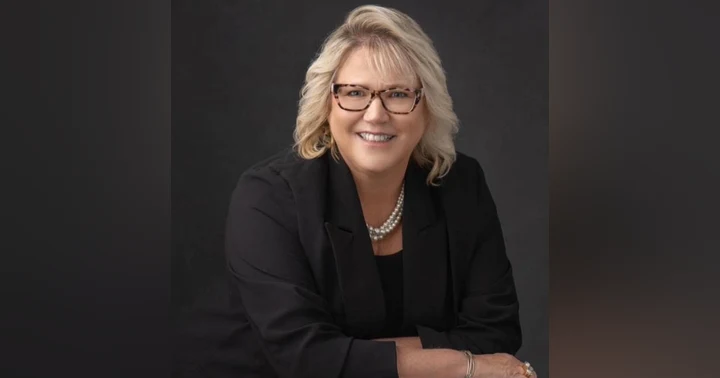
Cyndee Haydon, a broker associate with Future Home Realty and the current treasurer of Florida Realtors, joined the Real Estate Excellence Podcast to address the most common objections head-on. Florida Realtors has invested millions of dollars in the Amendment 3 campaign and voted to formally endorse the measure on August 23. Cyndee spoke on behalf of the association, and her answers draw on more than two decades of experience working with Florida families on housing affordability.
Here are six objections she addressed directly, and the evidence-based responses she offered to each.
Objection 1: "This Is a Tax Shift, Not a Tax Cut"
The opposition's most repeated line is that homestead savings will simply be transferred onto renters, businesses, and non-homesteaded property owners. Cyndee acknowledged the concern directly before dismantling it.
"Every Floridian is going to benefit. Every homesteaded property is going to benefit. We know with the additional savings. I also know that we elect our local government, and we'll be part of the conversation."
She noted that non-homesteaded properties, including rental homes and commercial buildings, benefit from a separate provision in Amendment 3 that reduces the annual assessment cap from 10 percent to 5 percent. That change creates more predictable costs for landlords and small business owners, which she argued reduces rather than increases pressure to pass costs along to tenants.
Amendment 3 also does not dictate how local governments respond. They have the authority to reprioritize spending, identify efficiencies, and make adjustments without automatically raising other costs on residents. A new state law that goes into effect in 2027 will require all local and county governments to publish line-item budgets showing where they could reduce spending by 10 percent, adding transparency to a system that has historically operated with revenue flowing into general buckets without detailed public justification.
Objection 2: "Police and Fire Will Be Cut"
This is the emotional core of the opposition's case, and Cyndee addressed it with a combination of legal fact and historical precedent.
On the legal side, the amendment's text specifically directs that local property tax dollars must prioritize public safety, health, and mission-critical services. Fire departments, police agencies, and hospitals are not discretionary items that local officials can trade away to balance a budget.
On the historical side, she returned to 2008 repeatedly as proof that dire warnings about service cuts do not materialize when exemptions expand.
"In 2008 when nobody asked permission, but we had a market crash that dropped about 40 percent or more in values. The same year the voters also increased the property tax exemption from 25 to 50,000, and we heard at that time many of the same concerns. And guess what? The police still showed up. The fire still showed up. The hospital still ran. We figured it out."
She added a pointed observation about the voices leading the opposition: "The loudest voices that I've experienced against Amendment 3, and many of them are in that sheriff, fire, et cetera, are the people benefiting from the large windfalls of money." She was careful to note that she does not begrudge anyone their salary, but she argued that those with the most to lose financially from any budget scrutiny are not necessarily the most objective voices on whether relief is warranted.
Objection 3: "It's Not Perfect, So We Should Wait for Something Better"
Some critics have argued that the amendment has flaws and that a more comprehensive solution should have been pursued instead. Cyndee found this argument particularly frustrating given the timeline of the debate.
"When locals say, 'But we could have done better, and we could come up with something better,' my real question is: it's been doubling since COVID dramatically. Where were you? Where is the proposal?"
Governor DeSantis began publicly discussing property tax relief two years ago. The conversation has been public, documented, and open to alternative proposals. No comprehensive competing plan emerged from local governments during that period.
She also put the rarity of this moment into perspective. Florida voters have had the opportunity to expand homestead exemptions only a handful of times since the property tax system was established in 1934. The last expansion came in 2008. Before that, voters waited until the 1980s. If Amendment 3 fails, Cyndee suggested it could be another 18 to 40 years before a similar opportunity arises.
"Perfect is the enemy of good," she said. "The reality is, this is a first step, and there is an implementation plan."
Objection 4: "Florida Realtors Only Backs This Because It Generates More Commissions"
This is among the sharper attacks on Florida Realtors' involvement, and Cyndee answered it with a disarming analogy before pivoting to the substantive case.
"Does the sheriff hope there's more crime so he can make more money? Does the fireman hope there's more fires so he makes more money? Does the doctor hope there's more illness?"
She then made the counterintuitive financial argument: if the amendment fails and property taxes continue rising to the point where homeowners are forced to sell, that actually generates more transactions and more commissions for real estate professionals. Keeping people in their homes at reduced tax burdens produces zero transaction activity.
"I'd rather keep people where they are, and I make zero, and I will gladly take it all day long, than to force out good people who made an investment and they have to keep renting their home from the government in the form of property taxes."
She also placed Florida Realtors' track record on the table as an EEAT signal. The association has led successful advocacy on insurance reform, Hometown Heroes down payment assistance, water quality legislation, and multiple prior property tax expansions. Those campaigns were not driven by commission calculations. They were driven by the same constituency that Amendment 3 is designed to help: Florida families trying to afford homeownership over a lifetime.
Objection 5: "Counties Will Just Raise Fees and Millage Rates to Make Up the Difference"
This concern is legitimate as a hypothetical, and Cyndee did not pretend otherwise. But she placed the power to stop that outcome squarely where it belongs.
"The average voter is smart, and if that's the path that the people in office choose to take, then that's why we have a ballot and we have elections."
She argued that the transparency requirements built into the new 2027 budget law will make any attempt to quietly backfill revenue through fee increases far more visible to residents than such maneuvers have ever been before. When governments are required to publish line-item budgets showing where they could cut, the public gains a framework for evaluating whether fee increases are justified or retaliatory. That accountability did not previously exist in a system where revenue flowed automatically into general accounts.
Objection 6: "Revenue Is Already Down. Local Governments Can't Absorb More Cuts"
This objection often comes packaged with the observation that governments are not raising millage rates, yet homeowners' bills keep climbing. Cyndee explained exactly why that happens.
"Think about what home values were in 2019 and what they are today. In my area, the average home went from about 250 to 440. You could keep the same millage, and they're still collecting more."
The gap between what residents experience and what governments collect is compounded every time a home sells. At reassessment, a property that was generating modest tax revenue under a long-term homesteaded owner suddenly produces a dramatically higher bill for the new buyer. Local governments capture that windfall without any adjustment to their stated tax rates, and that revenue increase rarely appears in public conversations about the budget impact of Amendment 3.
Cyndee also shared a personal example of how the system produces unexpected consequences even under homestead protection. After Hurricane Helene damaged her home and required her to vacate for over a year, the Calamity Law initially reduced her taxes slightly. The following year they jumped 23 percent even though the home's value was still down 25 percent from pre-storm levels. The system contains mechanisms that produce tax increases in circumstances where most homeowners would logically expect relief.
The cumulative picture Cyndee painted is of a revenue system that has grown by nearly 100 percent over the past decade, driven by value appreciation, population growth, and transaction windfalls, while families have seen cost-of-living increases of roughly 25 percent. The math, she argued, makes a strong case that relief is overdue regardless of which specific objection gets the most airtime in the closing days of the campaign.
Florida voters have until November 3 to decide. More information is available at voteyeson3.com, including county-by-county data showing exactly how much property tax collections have grown over the past decade.
Featuring Cyndee Haydon · Florida Association of Realtors · Real Estate Excellence × ReadTomato

Host of Real Estate Excellence | Mortgage Loan Officer NMLS #23368
Tracy Hayes is the host of Real Estate Excellence, a podcast dedicated to bringing you real conversations with top-performing real estate professionals across Florida and beyond.
A mortgage loan officer with nearly two decades of industry experience (NMLS #23368), Tracy brings a unique perspective to every interview — combining deep lending expertise with a genuine passion for the people and stories that shape the real estate industry.
Based in Northeast Florida, Tracy has spent years building relationships with the agents, brokers, team leaders, lenders, and coaches who are setting the standard in today's market. Real Estate Excellence is his platform for sharing their unfiltered insights with agents and real estate professionals who want to grow, lead, and succeed.
Florida Amendment 3 Explained: What Every Homeowner, Renter, and Voter Needs to Know Before November 3