Crane Island, Quiet Luxury, and the Developer's Eye: What John Hillman Sees in a Property That Most Agents Miss
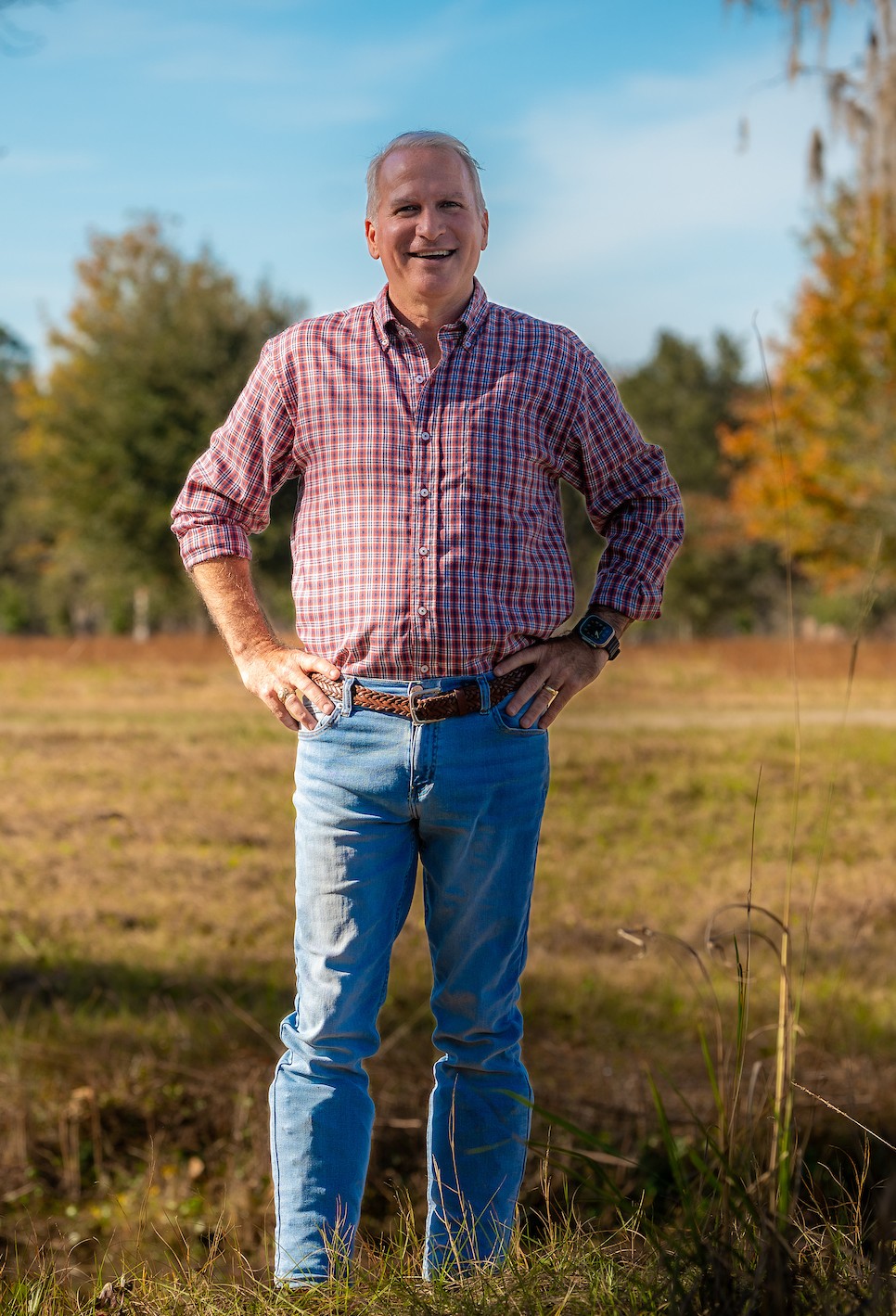
When John Hillman walks a piece of land, he is not just looking at what is there. He is doing math in his head, reading the bones of a neighborhood, and imagining the daily rituals of people who do not yet know they are going to live there.
John Hillman, an agent with Cabana Lane in Fernandina Beach, Florida, has spent more than two decades doing exactly this across luxury communities in Hawaii, the Cayman Islands, Naples, and markets well beyond Northeast Florida. He launched Ritz Carlton residential projects. He helped shape communities for Auberge Resorts and Palmetto Bluff. And now, with Cabana Lane, he has brought that developer's perspective to Amelia Island in a way that no boutique brokerage in the area has attempted before.
The results are visible in the numbers at Crane Island, a gated barrier island community that has become a benchmark for luxury living in the region. When the community launched, projections suggested a ceiling around seven to eight hundred dollars per square foot. A riverfront home recently sold for fourteen hundred dollars per square foot.
"We knew we were going to try to create something that didn't exist. And really the idea of escapism that's not laden with burden."
What the Developer's Eye Actually Looks For
Ask John what he sees in a home or a piece of land that most agents miss, and he goes immediately to first principles.
The concept he calls land residual is the starting point. For every dollar of land value, a well-calibrated development should produce two to three dollars in the structure built on top of it. When that ratio goes out of balance in either direction, it signals a problem. Spend too little on the home relative to the land, and the buyer leaves value on the table. Overspend on a lot and build modestly, and the property will struggle to justify itself in comparison to neighbors.
"If the land residual is like 10 or 15%, it's too low. And if it's 50%, they didn't build big enough."
Production builders use this framework constantly. Most individual buyers and their agents never think about it at all, which creates the conditions for the white elephant situation: the over-improved home in an under-achieving neighborhood, or the underdeveloped lot in a market that rewarded boldness.
Beyond the math, John reads construction quality in ways that come from being around hundreds of homes over decades. He sees opportunities where others see problems. He also catches the mistakes that photographs do not reveal, the ones that show up in due diligence or, worse, five years after closing.
Luxury Without the Overhead
One of the deliberate design choices at Crane Island was the decision to step back from the amenity-heavy model that defines many luxury communities. There is no mandatory club membership with a five-figure annual fee attached to ownership. There is a multi-million dollar clubhouse with a gym and a gathering space, but its most notable feature might be its honor bar.
"All the owners have taken this on," John explained. "If you go in and grab two beers or a glass of wine or a bottle of wine, you got to bring one back and match that." The system has held. It says something about who the community attracted.
John talks about this in terms of a generational shift in what affluent buyers actually want. The post-war generation needed the club for its social currency. Their children followed the same pattern. But buyers now in their 40s, 50s, and 60s are increasingly questioning whether the overhead of a full amenity package delivers the life they are actually trying to live.
"I live up in Malvern, PA. I have like a $100,000 club membership, and I got that there. I don't really need it here."
At Crane Island, you can ride a bike to the beach on a dedicated path the community helped install. You can drive three and a half miles downtown and choose from thirty restaurants. You can join one of the area's premier clubs if that is what you want. Or you can simply not.
The community that results from this design philosophy is what John is proudest of. Owners came from different places and now travel together. They have become genuine friends. The neighborhood is amenity light and community rich, a phrase John uses deliberately to distinguish it from what he sees in most luxury developments.
Reading the Amelia Island Market Honestly
John describes the current market with a saying that captures the tension well: some buyers think it is 2008 and some sellers still think it is 2022. His job is to help both sides understand value rather than price.
"The cynic knows the price of everything but the value of nothing," he said, borrowing a line that has stuck with him. In practice, this means having conversations that go beyond the comparable sales and into what a property actually represents for a specific buyer at a specific point in their life.
Time is value. For some buyers, the ability to move into a finished home and skip two years of the custom building process is worth a premium of one or two hundred thousand dollars. For others, it is not. Reading which situation you are in requires questions that most agents do not think to ask.
The Amelia Island market has a particular character that shapes these conversations. Most buyers are not making a primary residence purchase. They are evaluating a second home, an early retirement transition, or a full retirement move. Jacksonville pulls more primary buyers. Amelia pulls people who have already done something somewhere else and are now choosing how they want the next chapter to feel.
What Buyers Consistently Overlook at the Neighborhood Level
When the conversation turns to what buyers get wrong before they ever visit Amelia Island, John does not give a vague answer. He points to trees and architecture as the two most underestimated drivers of long-term value.
He uses Amelia Park as a case study. Developed about twenty years ago along the principles of traditional neighborhood design and new urbanism, it was designed with intention around historic patterns, deep porches, and front-facing street life. Today it stands as one of the most beloved neighborhoods on the island, with values that have separated significantly from neighboring developments that were built without that thoughtfulness.
"They got it right by trees and architecture, where neighboring neighborhoods don't quite get the same value."
At Crane Island, John and the team planted eighty to one hundred trees using a dedicated fund built into the development process. Every time an owner built a home, a contribution went into the tree fund. Simple, replicable, and durable.
Beyond the physical, John spends real energy thinking about rituals. The mailboxes at Crane Island are positioned next to the clubhouse intentionally. Every owner walking their dog to check the mail passes through a common space, and there are dog biscuits waiting. It is a small thing that produces a daily intersection of neighbors.
"If you understand people's rituals, or you help create a new ritual, it creates a better sense of identity and sense of community," he said.
Selling a Feeling, Not a Floor Plan
John attributes a specific professional philosophy to his years working with Ritz Carlton and One and Only, two of the most service-intensive brands in hospitality.
The Ritz operates on a simple internal mantra: ladies and gentlemen serving ladies and gentlemen. What John took from his time inside that training and culture was the importance of anticipation. Great service does not wait to be asked. It reads a situation and moves before the need is expressed.
"Don't wait for somebody to ask for something. Try to anticipate the need, or help people even anticipate their own need."
In real estate terms, this means understanding that a buyer's stated budget number is not the end of the question. How they arrived at that number tells you more. If it reflects everything they have available, the conversation goes one direction. If it reflects a considered choice to keep capital deployed elsewhere, it goes another. The second part of the question is usually more important than the first.
It also means not treating the closing gift as an expense line. John has made swings and benches from trees that had to be removed from a property. The gift represents something that mattered to the owner, not something that checked a box for the agent.
Building on a Barrier Island: What Nobody Tells You First
For buyers considering a custom build at Crane Island or anywhere on Amelia Island, John is direct about the timeline reality that catches most people off guard.
From the moment a shovel hits the ground, construction runs ten to twelve months. That part most buyers understand. What they underestimate is the time required to get ready to pull a permit. Design alone can take eight months to a year. Engineering follows. Permitting follows that.
"If you bank on 20 to 24 months, we'll still be friends at the end of this," he said. "If you think I'm going to do this in 16 or 18 months, you might be a little disappointed."
To shorten that cycle, John's approach at Crane Island has been to offer buyers a curated set of architect-designed plans, not builder plans, as a starting point. Modifications are made to match a buyer's program and lifestyle, but the foundation is already engineered. It is the difference between refining and reinventing.
On the material side, building near salt water requires stainless steel for everything: hinges, doorknobs, all of it. The salt air is relentless. John has helped convert a half dozen ocean-front homeowners to Crane Island over the years, in part because of that maintenance reality combined with the isolation that comes with oceanfront living. At Crane Island, you have the coastal environment and the community, without the VRBO neighbor rotating in every weekend.
The HOA Conversation Luxury Buyers Are Not Having
John watches with some concern how quickly buyers in the luxury segment dismiss HOA fee discussions, and how little attention gets paid to the trajectory of those fees over time.
Insurance, landscaping, and security are the three buckets that drive most HOA budgets. When one or more of those spikes, and insurance in particular has spiked sharply in the Florida market in recent years, the impact on carrying costs can be significant for buyers on fixed retirement income.
"If it's going up 15 to 20% every year, something's not right," he said. The due diligence he recommends goes beyond asking what the current fee is. It means calling the HOA directly, understanding the reserve position, asking whether assessments have been completed or are pending, and getting a clear picture of the trajectory.
In condo situations, that conversation becomes even more critical. The gap between what a number looks like today and what it will look like in three years can determine whether a retirement plan stays on track.
The Takeaway
What John Hillman demonstrates across twenty-plus years of luxury real estate is that the developer's eye is not a special gift. It is a trained discipline built from asking better questions, studying what actually drives long-term value, and caring enough about a client's outcome to tell them hard truths when the situation calls for it.
For buyers approaching the Amelia Island market, the most useful question to sit with before a single showing is scheduled is this: are you buying a property, or are you designing a life? The answer changes everything about how the search should be run, and who should be running it with you.
Featuring John Hillman · Cabana Lane · Real Estate Excellence × ReadTomato

Host of Real Estate Excellence | Mortgage Loan Officer NMLS #23368
Tracy Hayes is the host of Real Estate Excellence, a podcast dedicated to bringing you real conversations with top-performing real estate professionals across Florida and beyond.
A mortgage loan officer with nearly two decades of industry experience (NMLS #23368), Tracy brings a unique perspective to every interview — combining deep lending expertise with a genuine passion for the people and stories that shape the real estate industry.
Based in Northeast Florida, Tracy has spent years building relationships with the agents, brokers, team leaders, lenders, and coaches who are setting the standard in today's market. Real Estate Excellence is his platform for sharing their unfiltered insights with agents and real estate professionals who want to grow, lead, and succeed.
Agrarian Revival and the 11 at Congaree and Penn: A New Vision for Luxury Land Living Near Jacksonville