Serving Baby Boomers and Downsizers: What Jacksonville Real Estate Gets Wrong About This Client

There is a version of the downsizer client that appears in real estate training materials: a couple in their late 60s, empty nesters, ready to trade a four-bedroom suburban home for a low-maintenance condo closer to the grandchildren. The transaction is presented as relatively straightforward. The clients know what they want. The numbers usually work. The emotional component is described as manageable.
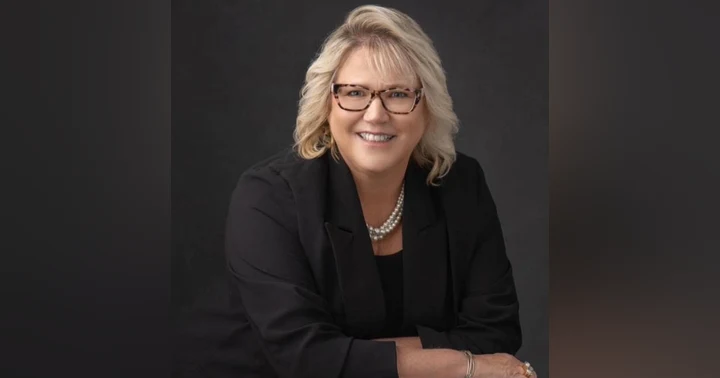
Tiara Bolton, an agent with Momentum Realty who has worked the Jacksonville market for more than 22 years, has a different picture entirely. The downsizer transaction is among the most emotionally complex and practically demanding in all of residential real estate. The clients who get it right are the ones who work with an agent who understands why.
Why This Client Is Different
Tiara has developed what she describes as a sensitivity and awareness for the particular circumstances that older clients bring to a real estate transaction. Part of that awareness comes from professional experience. Part of it comes from something more personal.
"I was my mom's caregiver for seven years," she said. "Five of that she lived with us. I had to deal with all that emotional weight of it and selling off her assets and what that meant for my family. So it's not just the people, the husband and the wife. It affects everybody."
Tiara's mother began showing symptoms of Alzheimer's and dementia in her 50s and passed away in 2023 at the age of 67. Walking alongside her mother through that decline, managing her assets, navigating Medicaid and Medicare implications, and handling the estate gave Tiara a firsthand understanding of how quickly circumstances can change and how catastrophically unprepared most families are when they do.
"It takes one traumatic event," she noted. "It could be financial. It could be a loss of a loved one. It could just be something in your life that turns upside down."
That lived experience fundamentally shapes how she serves aging clients. She is not reading from a checklist. She is drawing from a place of genuine understanding, which is precisely why she said she is uncertain whether she gravitates toward baby boomer clients or whether they gravitate toward her.
What Service Actually Looks Like in These Transactions
Tiara's philosophy, which she describes as "serve before you sell," is visible in every stage of how she works. With downsizing clients, that service often extends far beyond what the transaction technically requires.
She has helped clients prepare homes for sale while the sellers were managing health crises. She has assisted with physical moves when professional movers left families stranded hours before closing. She has scrubbed houses at the end of deals that should have been simple but turned complicated. None of this was in the listing agreement. All of it was in the relationship.
"I will do what it takes," she said. "I find what my client needs and wherever that case may be. Some need a little bit more help than the others."
A recent review that particularly moved her came from a transaction in which the sellers had three young children who were all sick during the listing preparation period. Tiara stepped in to get the home ready for photographs herself. After closing, the mother-in-law, who was a former agent, pulled Tiara aside.
"She said, 'I've just never seen anybody do that,'" Tiara recalled. "And it was just hard, but, you know, I helped them prepare the house. They had three kids. They were actually all sick, so they couldn't do it, and we had photos, so things needed to get done."
The Conversations Most Agents Are Not Having
Beyond the physical and emotional support, Tiara brings a level of practical guidance to older clients that most agents either do not think to offer or do not feel equipped to provide. The core of that guidance is around estate planning, title, and the dangers of leaving legal and financial affairs unresolved.
She is careful to stay in her lane. She is not an attorney, a CPA, or a financial advisor, and she says so clearly. But her knowledge, built through personal experience and years of working with clients at every stage of life transition, allows her to ask the right questions and direct clients to the right professionals before a crisis forces the issue.
"Make sure the property is titled correctly so you don't have to go through probate, 'cause probate can be very expensive," she said. "And stressful for all parties. If you have too many people or hands in the pot, make sure it's going to the right place, and not having to be handled in court."
She raises questions about mental competency in a careful, compassionate way. She has had transactions where she was not comfortable with the direction of a conversation and took steps to involve family members or suggest an attorney consultation before proceeding. She watches for signs that a client may be in a vulnerable state, especially widows or widowers who may not have been the primary financial decision-maker in their marriage.
"Whether it's a widow and one's been deceased and they didn't have a will, or maybe she didn't handle the finances, maybe she doesn't know her finances. There's a lot of things you gotta get into," she noted.
The Independence Paradox and Why Families Get Stuck
One of the most consistent patterns Tiara observes is what might be called the independence paradox. Older clients often resist involving their children in financial and legal planning because doing so feels like a surrender of control. The very act of having the conversation feels like an acknowledgment that the end is approaching.
"They feel like the kids are taking that away from them, their independence. It's personal. My kids don't need to know my finances. It's my money, not their money," she said, reflecting the mindset she frequently encounters.
The result, in too many cases, is that families discover after a parent's death or cognitive decline that estate documents were never updated, title was never structured correctly, and a straightforward transfer of assets becomes a years-long legal process that costs the family a significant portion of what the parent worked a lifetime to accumulate.
Tiara shared a recent conversation with a neighbor whose sister was going through cognitive decline and actively shredding important documents, refusing to acknowledge that anything needed to be addressed.
"He said, 'Yeah, she was in there just shredding all the paperwork.' I'm like, 'Oh, no.' And he said, 'We're trying, but she's so stubborn and so independent and so prideful,'" she recalled.
Her response to clients in these situations is to reframe the conversation. Having an estate attorney structure the proper documents is not about giving up control. It is about preserving the ability to direct what happens. It is the most powerful expression of independence available to someone who wants their wishes honored rather than interpreted by a courtroom.
"Why did you work so hard to earn that money, save it, and you probably gave up on things, vacations, whatever, to save that money, and now you're gonna let it go to some attorney and a courtroom?" she said.
Matching Life Stage to the Right Housing Decision
The practical side of serving older clients well requires an honest assessment of what type of housing actually makes sense for where someone is in their life, not just what they think they want.
Tiara is knowledgeable about Jacksonville's active adult communities, assisted living facilities, and the range of options that exist between full independence and residential care. She has visited enough of these facilities to provide meaningful guidance about what the transition looks like and what it costs.
She also thinks carefully about timing. Her mother's decline happened rapidly, and Tiara said that if she had purchased a house for her mother at the stage when the symptoms were becoming apparent, it would not have made financial sense given how quickly things changed.
"Sometimes it makes more sense to go into an apartment, not a home, because I know the toll it can take," she said.
For clients who do want to purchase a home that will serve them through their later years, she focuses on the practical details that will determine long-term livability: single-story layouts, ground-floor primary suites, proximity to family, access to medical care, and the total cost of ownership including insurance, maintenance, and any HOA or CDD obligations.
She is also increasingly attentive to the ADU conversation, noting that accessory dwelling units can offer a middle path for families who want to keep aging parents close while preserving a degree of independence for everyone involved.
Why the Real Estate Industry Needs More of This
The baby boomer generation represents an enormous wave of housing transition that will define the Jacksonville market, and markets across the country, for the next decade. The volume of transactions will be significant. The emotional and legal complexity will be even more significant.
Agents who approach these clients as simply older versions of the standard buyer or seller will miss most of what matters. The clients who are best served will work with professionals who understand that this transaction is rarely just about real estate. It is about identity, legacy, family dynamics, health, and the particular grief that comes with leaving a home that holds decades of memory.
"Mentally, physically, emotionally, I understand it way too well. And it can take a strain. So I just try to coach them to the right lifestyle, whether it's maybe going into active adult, maybe moving into a home where we can do an ADU and still keep them home, because I think it's important for us to care for them."
Tiara Bolton does not claim to have all the answers for every client who arrives at this stage of life. What she claims, and what her clients consistently confirm, is that she shows up fully, asks the questions that need to be asked, and stays in the transaction long after most agents would consider their job done. In serving before she sells, she has built something that no marketing budget can replicate: a reputation for being the agent who actually cares about what happens next.

Host of Real Estate Excellence | Mortgage Loan Officer NMLS #23368
Tracy Hayes is the host of Real Estate Excellence, a podcast dedicated to bringing you real conversations with top-performing real estate professionals across Florida and beyond.
A mortgage loan officer with nearly two decades of industry experience (NMLS #23368), Tracy brings a unique perspective to every interview — combining deep lending expertise with a genuine passion for the people and stories that shape the real estate industry.
Based in Northeast Florida, Tracy has spent years building relationships with the agents, brokers, team leaders, lenders, and coaches who are setting the standard in today's market. Real Estate Excellence is his platform for sharing their unfiltered insights with agents and real estate professionals who want to grow, lead, and succeed.
The Tax Shift Myth and 5 Other Amendment 3 Objections That Don't Hold Up to Scrutiny